








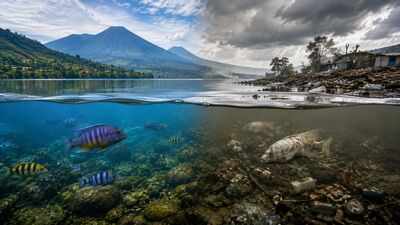
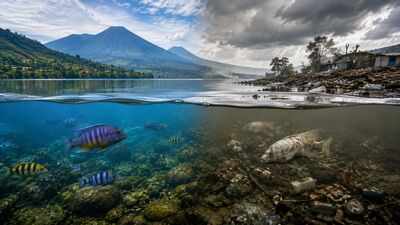
Somewhere along the East African Rift Valley sits a chain of lakes holding more than a quarter of all the surface freshwater on the planet. Most people have never heard of them. The African Great Lakes span ten countries, keep over 50 million people fed and employed, and rarely get a mention alongside the world’s other great natural wonders. Beneath the surface, though, is a level of biodiversity that would not look out of place on a coral reef, packed with fish, crustaceans and invertebrates that exist nowhere else on Earth. A new global assessment of freshwater species has now put a number on just how much of that is at risk, and the African Great Lakes sit right at the centre of the story.
The African Great Lakes hold over 25% of Earth’s surface freshwater
There isn’t just one African Great Lake. It’s a network, strung along the East African Rift, taking in Victoria, Tanganyika, Malawi, Turkana, Albert, Kivu and Edward. According to the African Centre for Aquatic Research and Education, together they hold over 25% of the world’s surface freshwater and support more than 50 million people across ten countries through food and jobs. Lake Victoria alone is the second largest freshwater lake on the planet by surface area. Tanganyika goes deeper still, second in the world for both depth and volume, which gives this stretch of Africa a scale that very few freshwater regions can touch.According to the U.S. Department of State, these lakes also happen to be the source of three of Africa’s biggest rivers, the Nile, the Congo and the Zambezi, so what happens here ripples outward to ecosystems and communities well beyond the shoreline. The region is home to more than 10% of the world’s freshwater fish species, packed into a relatively small area. It’s this density that has drawn comparisons to marine reef systems, an odd label for lakes sitting hundreds of kilometres from any ocean, but one that fits once you see the numbers.
Why the African Great Lakes are among the world’s most threatened freshwater ecosystems
Recent global research has flagged the African Great Lakes as one of the most vulnerable freshwater regions anywhere. According to the study published in Nature, titled “One-quarter of freshwater fauna threatened with extinction”, the single highest concentration of threatened freshwater species on Earth sits around Lake Victoria, alongside Lake Titicaca, Sri Lanka’s Wet Zone and India’s Western Ghats. These are the exact places where species found nowhere else tend to cluster, so any loss here isn’t something that can be undone later. Found crabs, crayfish and shrimp facing the steepest extinction risk of any group looked at, with close to a third of species under threat, freshwater fish not far behind, then dragonflies and damselflies. Those first two groups are exactly what the African Great Lakes are known for, so the findings land harder here than in most other places. Backing all this up is more than twenty years of work by over a thousand experts worldwide, which is not a small undertaking for a single piece of research.
How pollution, overfishing and population growth are threatening the African Great Lakes
Size hasn’t shielded the African Great Lakes from human pressure. Fast population growth in nearby areas keeps pushing communities closer to the water in search of something clean to drink, which only tightens the squeeze on resources that were already stretched thin. Fishing methods across much of the region are unsustainable at this point, and the money made from those catches often doesn’t stay with the communities doing the fishing.Then there’s pollution, which makes everything worse. Waste from towns and industry, plus sediment washing in from deforestation and farming, keeps chipping away at water quality across the lakes. That lines up with what the wider global study found too. Pollution from agriculture and forestry touches more than half of all threatened freshwater animals worldwide, on top of habitat loss from land conversion, water extraction and dams that cut off migration routes for fish.
Why climate change could make the African Great Lakes biodiversity crisis even worse
Climate change is the wildcard sitting on top of all this. The shifts expected across sub-Saharan Africa in coming decades could put both water security and people’s wellbeing at risk throughout the region, chipping away at communities’ ability to stay self-reliant. For lakes already carrying this many livelihoods, even a small change in rainfall patterns could cause outsized damage.The people behind the global assessment are clear that freshwater conservation can’t just borrow strategies built for other ecosystems. Freshwater species face different threats to amphibians, birds, mammals and reptiles even when they’re sharing the same habitat, so a one-size-fits-all approach simply won’t cut it.