









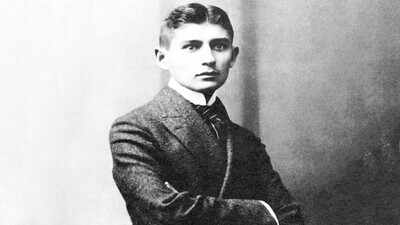
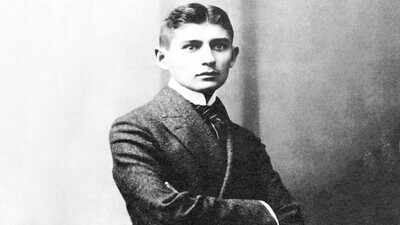
“By believing passionately in something that still does not exist, we create it.” — Franz KafkEvery invention, every work of art and every social movement begins in a place that nobody else can see. Before there is a bridge, someone pictures a way across the river. Before a vaccine exists, someone believes a disease can be defeated. Before a novel reaches readers, it spends years as scattered thoughts inside one person’s mind. The world changes because people allow themselves to take ideas seriously long before those ideas have any physical form. That is the promise contained in this line attributed to Franz Kafka. Imagination is not an escape from reality. It is where many realities first begin.Kafka understood what it meant to live between the ordinary and the possible. By day he worked in an insurance office in Prague. By night he wrote stories unlike anything his contemporaries had produced, stories that would influence literature for generations even though he never lived to see most of them published. Whether he was writing about strange trials, impossible transformations or invisible systems of power, he trusted that ideas could travel much further than the circumstances in which they were born. The quotation carries the same instinct. Something new enters the world because someone refuses to dismiss it while it still exists only in thought.
Every breakthrough starts as an impossible idea
Looking back, history has a habit of making breakthroughs seem inevitable. The aeroplane, the internet, organ transplants and reusable rockets now belong to everyday conversation. At the moment they were proposed, each attracted doubt from people who saw only practical obstacles. The brothers who experimented with powered flight had no guarantee they would ever leave the ground. Tim Berners-Lee imagined a web of connected information before most people had even used a computer. Scientists who spent years chasing a treatment for diseases worked with possibilities rather than promises.The same pattern appears far from laboratories and engineering workshops. A teacher redesigns lessons because she believes children can learn differently. A musician hears a sound nobody else has tried. A young entrepreneur sketches an idea on paper before there is a company, an office or a customer. The finished result may look obvious years later. At the beginning there is only conviction, patience and the willingness to keep working while everyone else sees an empty page.
Imagination needs to be accompanied with effort
Ideas have always depended on people who are prepared to give them time. A passing thought changes very little. A thought that returns every morning, grows through revision and survives disappointment begins to acquire weight.Walt Disney was turned away by editors before building one of the world’s most influential entertainment companies. James Dyson built thousands of prototypes before his vacuum cleaner worked the way he wanted. Their stories are different, though they share one habit. They treated imagination as the start of a long process instead of the finish line.That habit matters in ordinary lives too. Someone learning a language spends months speaking imperfectly before conversations become natural. A researcher reads hundreds of papers before discovering one useful insight. Parents raising children often imagine qualities they hope to nurture years before they become visible. Belief gains its value because it continues through the quiet work that follows.
Why the quote still matters
People live in an age that rewards immediate results. New ideas are expected to prove themselves quickly, while slow progress can look like failure. The temptation is to wait until success feels certain before committing to an ambition. History rarely moves that way. Most worthwhile achievements spend a long time existing only as possibilities.This saying by Kafka endures because it recognises something people experience again and again. The future arrives twice. It appears first in the imagination of someone willing to picture a world that does not exist, then much later in the lives of everyone else. Every invention, every movement and every piece of lasting creative work follows that journey. The first step is always invisible, though it is no less real for that reason.