









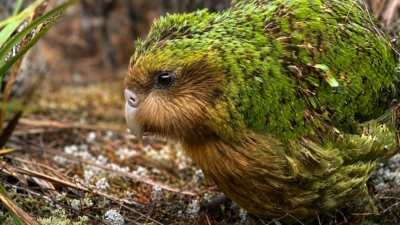
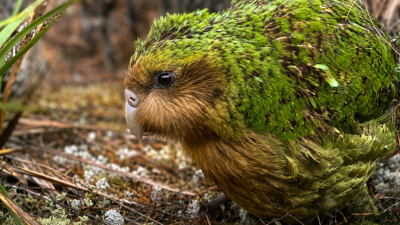
Imagine leaving everything behind, moving to a remote island, and living there mostly alone for more than a decade to help save a bird few people then valued. That is what Richard Henry did in New Zealand. He took his rowing boat and transported hundreds of flightless and ground-dwelling birds called kākāpō to a far-off sanctuary island, hoping to save them from extinction. According to a landmark review of kākāpō conservation published in Bird Conservation International by researchers Mick Clout and Don Merton, this early rescue mission became one of the world’s first real attempts at what scientists now call conservation translocation.Who was Richard Henry, and why did he care so much?Richard Henry was born in Ireland’s County Kildare in 1845. The family later moved to Australia, and Richard grew up in the Australian outback. Later, in the 1870s, he migrated to New Zealand and settled near Lake Te Anau, in the south-western part of New Zealand’s South Island.While working as a rabbiter and in other jobs such as shepherding and boat-building, he noticed something troubling. Stoats, ferrets, and weasels introduced for controlling the rabbit population were also killing the native bird species. The kākāpō, which is flightless and smells musky, was especially vulnerable.Henry continued raising alarms about his observations. Most people simply did not pay heed to him. Henry did not have any scientific education, and his ideas were considered unconventional at the time, according to Bird Conservation International. Yet he did not stop stressing the need for creating an island sanctuary for birds.In 1891, the New Zealand government finally set aside Resolution Island in the remote Fiordland region as a nature reserve. Three years later, in 1894, Henry was hired as its curator and caretaker.
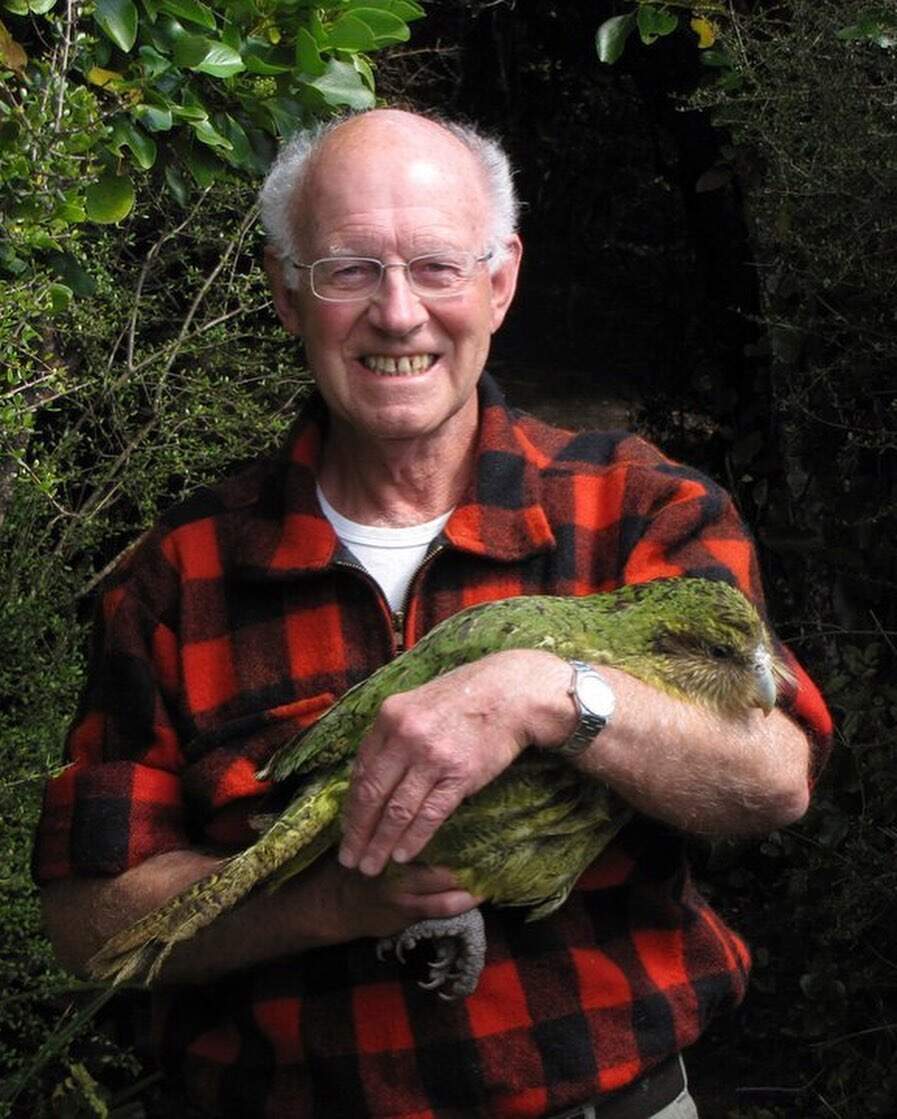
The kākāpō named “Richard Henry,” held by conservationist Don Merton on Codfish Island, decades after the man it was named for died. Image Credits: Wikimedia Commons
A boat, a dog, and hundreds of birdsHenry’s task was simple to describe but difficult to carry out. He had to catch kākāpō and kiwis on the mainland and row them across open sea to Resolution Island, where predators had not yet reached.He worked with his fox terrier, named Lassie, who tracked the birds hiding in thick forests. His dog wore a muzzle to prevent any harm to the birds and a bell for Henry to track the path of his dog in the forest. In the following years, he moved hundreds of birds to the island, according to New Zealand’s Department of Conservation, which now runs the kākāpō recovery programme.It was tedious and isolated work for Henry, who lived almost alone in a tiny cabin and rowed to and from the island in any weather. A paper in Notornis, the official journal of the Ornithological Society of New Zealand, titled ‘A parrot apart: the natural history of the kakapo (Strigops habroptilus), and the context of its conservation management’ says his attempt may have been one of the first to populate an island with flightless birds.The island was not as safe as he had hopedIt worked for a while, but in August of 1900, Henry saw a weasel on Resolution Island. Stoats, which are good swimmers, also managed to reach the island. Within a few years, the very predators that Henry had been running from were trailing after him.When Henry left the island in 1908, the kākāpō population that Henry had spent so much effort building had begun to collapse. Henry later became a ranger on Kapiti Island and then retired quietly to a small home near Auckland. He passed away in 1929, largely unrecognised for his efforts.Why his 14 years alone still matterHenry’s mission could have been labelled a failure. His island refuge was only temporary. But Henry’s approach, involving careful capture, boat transport and predator-free islands, laid the foundation for the standard method of protecting kākāpō and many other endangered species.
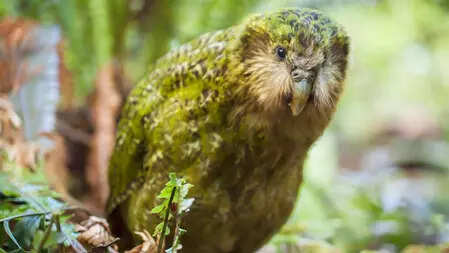
The kākāpō’s population fell to just 51 birds by 1995; today, careful conservation has brought that number to 236.
There is also a quiet twist to this story. In 1975, 46 years after Henry’s death, scientists looking for kākāpō in Fiordland discovered a lone male on the mainland. They named it Richard Henry in memory of the man who initially tried to protect the species. The bird later became an important founder of the genetic lineage of the contemporary population of kākāpō, notes a 2021 genome study titled ‘Population genomics of the critically endangered kākāpō,’ published in Cell Genomics.The study sequenced 60 kākāpō genomes and used population-genomic analyses to reconstruct the species’ recent history, including a severe founder effect and strikingly low diversity compared with other birds. The authors found that Richard Henry’s line persisted through the bottleneck and helped shape the present-day genome. Surprisingly, the study found that today’s kākāpō actually carry a lower load of harmful genetic variants than expected, a sign that inbreeding may have “purged” some damaging mutations over time. Even so, the population still shows signs of inbreeding depression, including low hatching success, which remains a key conservation concern.Long after Henry’s death, the bird named in his honour helped keep the species alive.A slow, hopeful comebackKākāpō numbers dropped to just 51 birds by 1995. From then on, careful conservation efforts, closely following the principles Henry pioneered over a century ago, have been instrumental in increasing the population. As of early 2026, New Zealand’s Department of Conservation had recorded 236 living kākāpō on predator-free islands, with breeding still underway.Richard Henry never lived to see his work pay off. He rowed hundreds of birds to safety, spent 14 years mostly alone on a remote island, and died believing he had failed. In many ways, his story was only just getting started.