









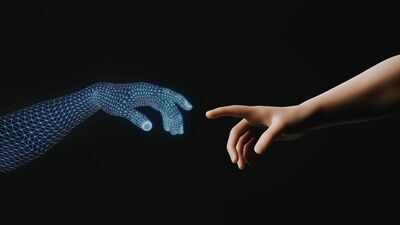
The Roman playwright Terence, who according to ancient accounts arrived in Rome as an enslaved man from Carthage and was later freed, wrote a line that has outlived his empire. In the comedy Heauton Timorumenos, first staged in 163 BC, a character declares: “Homo sum, humani nihil a me alienum puto.” It is usually rendered as: I am human, and I consider nothing human foreign to me.More than two millennia later, the word at the root of that line has been named Word of the Year 2026 by Cambridge Dictionary, in a year when the foreign has acquired a literal meaning. Geoffrey Hinton, the artificial intelligence (AI) pioneer and Nobel laureate, has argued that the technology is creating alien beings. “I’m willing to be selfish and choose humans,” he said, according to the dictionary’s statement as reported by Cable News Network (CNN). Terence’s alienum and Hinton’s alien share a Latin root, a coincidence worth a pause.
A 15th-century word in a 21st-century argument
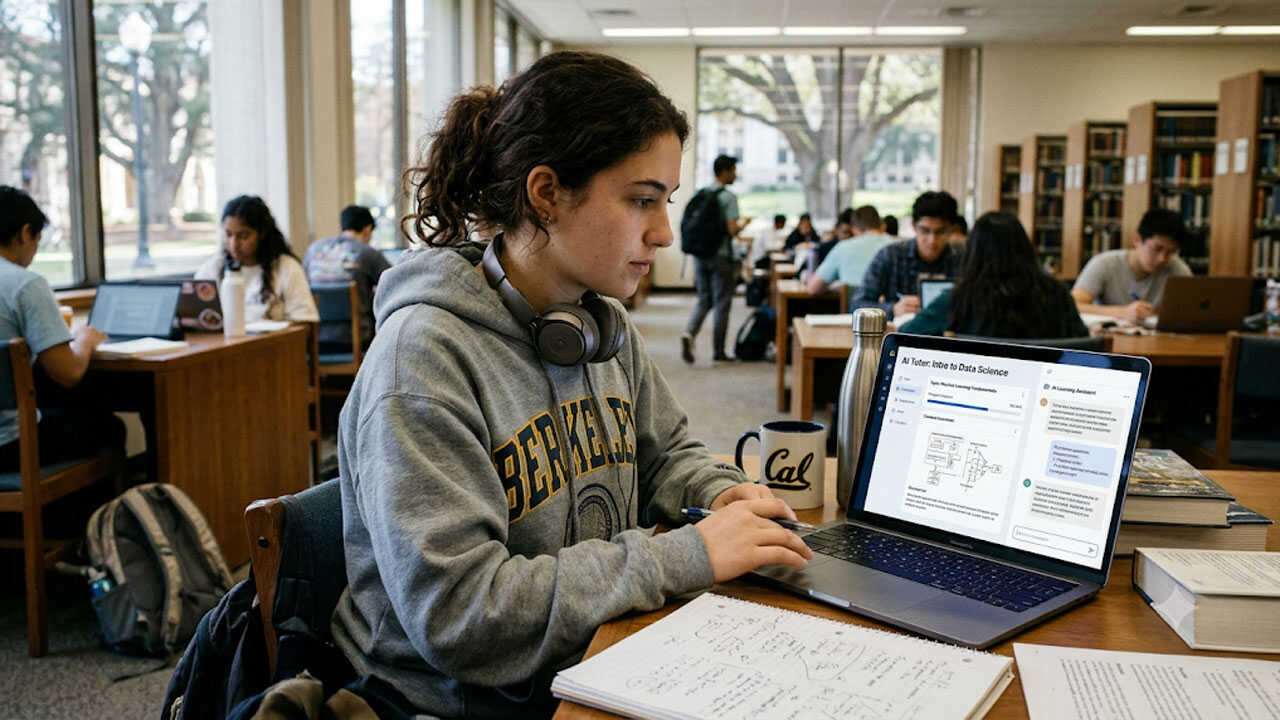
The adjective derives from the Latin humanus, has been in use since the 1450s, and is defined by Cambridge in contrast to gods, animals and machines. It is neither slang nor a coinage. The Associated Press (AP) described the choice as a throwback and a backlash of sorts, reflecting a debate over how AI has blurred the lines between machines and people.“AI is changing how we talk about being human,” Colin McIntosh, the dictionary’s lexicographer, told the AP. He added that fears about what people may lose when they outsource their thinking have made many reconsider their reliance on AI, from mathematicians to teachers of young children. CNN reported that McIntosh also noted a rise in compounds such as “human-made”, which now separate the work of people from the output of machines.Even Bill Gates, a promoter of AI, commented on the choice. He said AI is making people think harder about what it means to be human, and that its success should be measured by how much it improves human lives.
When identity becomes intellectual property
The statement also pointed to AI deepfakes, which can simulate people convincingly, and to the response from celebrities who have turned to trademark law. Matthew McConaughey’s lawyers described his filings as the first instance of an actor using trademark law to protect his likeness from AI misuse. Taylor Swift followed in April 2026, when her company TAS Rights Management filed trademark applications covering an image of her on stage and sound recordings of two spoken phrases.The strategy is untested. Trade commentary has noted that Swift cannot use trademark law to protect her voice or likeness in general, only specific sounds and images. The Philadelphia Inquirer reported that it remains unclear whether the approach will hold up in court. There is an irony in a person having to register a trademark to establish that they are, in fact, themselves.
From ‘hallucinate’ to ‘human’
The choice fits a pattern. Cambridge picked “hallucinate” in 2023, a reference to the tendency of AI to fabricate information, the same year Collins Dictionary chose “AI” itself. Last year Merriam-Webster named “slop” for low-quality AI content, while Collins went with “vibe coding”. Cambridge’s own 2025 choice was “parasocial”.Read in sequence, the Cambridge picks trace a shift. In 2023, the word described a flaw in the machine. In 2025, it described a bond between a person and a persona. In 2026, it describes the person.Other contenders this year included “agent”, for an AI system that can make decisions without human control, and “analogue”, for experiences or objects that do not involve digital technology. The AP’s own report carried an editor’s note stating that the story was produced by a human, a disclaimer that would have sounded absurd a few years ago.
The smaller entries
Cambridge also announced new additions, as reported by CNN. “Air jail” is a method of training an animal, especially a dog, by holding it off the ground when it shows aggression or other unwanted behaviour. “Aura farming” is the activity of doing things to project a personality that others admire. “Looksmaxxing” is the activity of making yourself as physically attractive as possible, as encouraged on social media by some people, mainly young men.Two of the three concern the performance of the self for an audience, which sits uneasily beside a Word of the Year that affirms the unperformed one.
What the choice says
“Man is the measure of all things,” Protagoras is reported to have said, in a line preserved by Plato in the Theaetetus. For roughly 2,400 years it has served as a boast, a creed and a provocation. Cambridge Dictionary’s 2026 choice turns it into a question: what becomes of the measure when the measuring is outsourced?In other words, the dictionary has not declared a winner in the argument between people and machines. It has only noted that the word needed defending.