










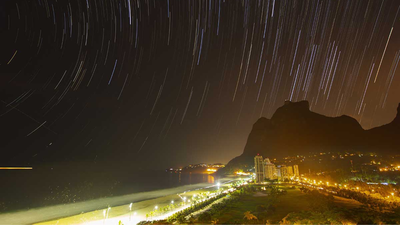
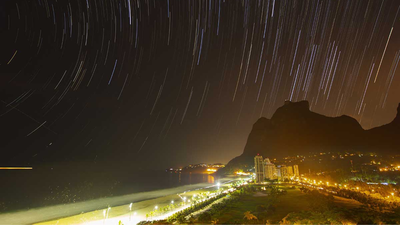
The artificial glow of the night sky is commonly known as skyglow, and it represents a growing form of light pollution that is changing the way humans view the natural world. Researchers have been tracking this phenomenon for a long time using satellite technology, but a comprehensive study published in the journal ‘Science’ reveals that the nights are getting brighter more rapidly than the instruments suggested initially.Between 2011 and 2022, thousands of volunteers across the world participated in a massive data collection effort, where they reported that the stars are vanishing from view very quickly. This research indicates that the night sky is brightening by an average of 9.6% each year, which is a speed that doubles the background light of the sky every eight years. Because of this, the young generation is looking at a future where the celestial beauty is erased by a man-made twilight.
Night Sky is rapidly getting brighter due to light pollution
The findings of this decade-long project suggest that the loss of a star-filled sky is happening much faster than earlier estimated. On average, the global night sky is brightening by almost 10% annually. This rate of change is particularly stark when viewed through the lens of a single human life. The study explains that a child born in a location where 250 stars are visible today would find that number to be less than 100 by the time he/she reaches their 18th birthday.There are clear regional differences in how quickly this change is happening. In North America, the researchers found a more aggressive increase of 10.4% per year, while Europe experienced a slower, but still significant, increase of 6.5%. Even in areas where development is gradual, the collective effect of new lighting and changing technologies is eroding the beautiful darkness of the evening hours.
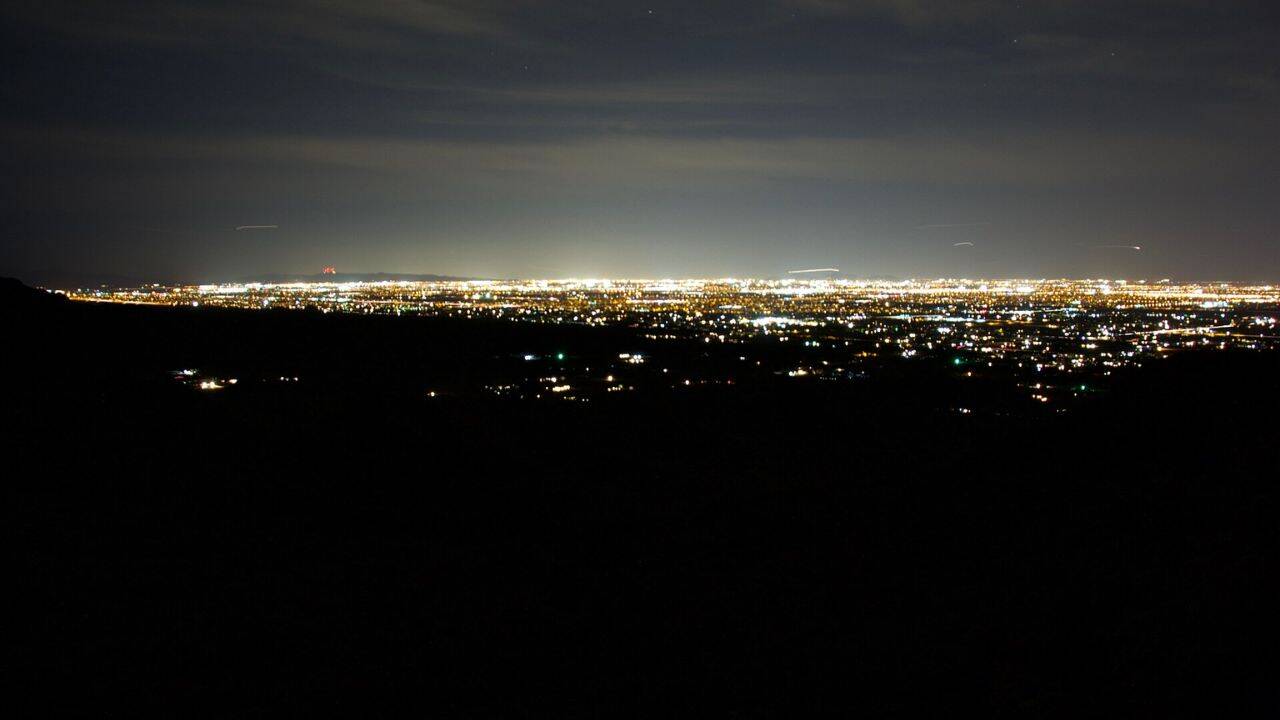
View of the Phoenix metro area from the top of Goldmine Trail in the San Tan Mountains. Image Credit: Wikipedia
How do people measure the stars vanishing from the night sky
To understand how the night is changing, researchers used a method that prioritises the human experience, which is called ‘citizen science.’ The study talks about an initiative called the ‘Globe at Night’ project, which invited members of the public to become observers. Between 2011 and 2022, participants contributed 51,351 naked-eye observations from around the world. These volunteers were provided with a series of star maps, each one showing different levels of light pollution, and asked to identify which one of those maps most closely resembled the sky from their specific location.This process allowed scientists to determine the ‘naked eye limiting magnitude,’ which is the ‘measurement of the faintest star a person can see in a given spot.’ By using the human eye as a sensor, the study captured a more personal and accurate record of how light pollution affects our view of the cosmos as compared to the automated machines. The data showed that as background glow of the sky increases, the faint points of starlight that have guided humanity for centuries are becoming invisible to the casual observer.
Satellites are missing the full scope of the problem
A significant part of the study focuses on ‘why past satellite measurements have underestimated the growth of light pollution.’ Satellites are excellent at measuring light that is directed straight up into space, but they are sometimes incapable of capturing specific types of light that contribute most to skyglow. For example, many modern satellites are not sensitive to shorter wavelengths, such as the blue light emitted by the Light Emitting Diodes (LEDs) that have become standard for outdoor lighting.Furthermore, the study points out that satellites struggle to detect light emitted horizontally. A streetlamp might point downwards, but the light from shop windows, decorative displays, and advertising signs often travels sideways. This horizontal light covers a much longer path through the atmosphere, which means it has more chances to scatter and create the bright haze that obscures the stars. Humans are far more sensitive to this scattered light than a satellite, because they see the sky from the ground.
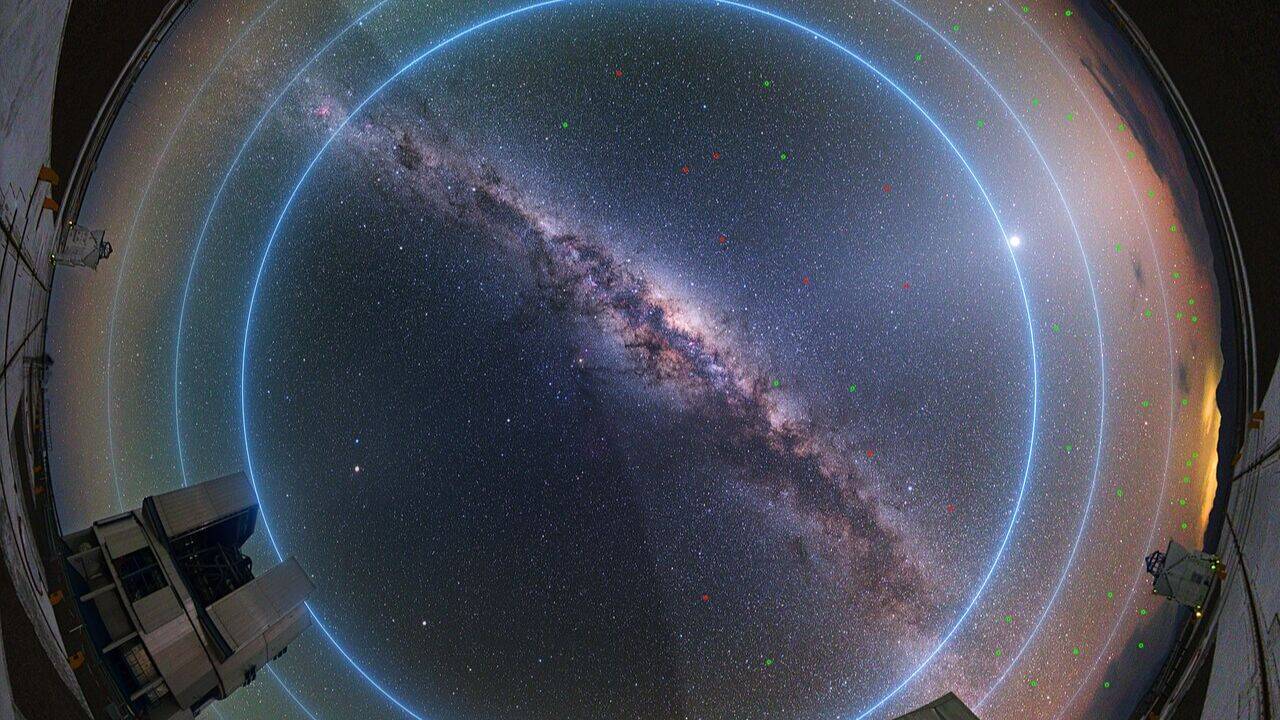
Visibility of satellites during twilight marked green and red. Image Credit: Y.Beletsky (ESO)/Wikipedia
What does this disappearance mean for life on Earth
The brightening sky impacts the very biological rhythms of life on our planet. The study notes that for a long time in history, the night sky only shifted to starlight and moonlight after sunset, but today, many regions never experience true darkness. This ‘artificial twilight’ disturbs many behavioural and physiological processes. For example, predators that rely on darkness to hunt may find it difficult because of the constant glow.Studies mentioned in the research have also shown physiological changes in aquatic life, such as fish, because of this skyglow. Beyond the ecological impact, there is a profound cultural loss. The Milky Way and the constellations have inspired art, religion, and science for thousands of years. When the stars disappear, future generations lose a unique connection to the natural world and an important sense of their place in this universe.
How can this beautiful darkness be saved
Despite the rapid increase in light pollution, the study suggests that the tools to address the problem are already well understood. Effective methods for reducing skyglow include using ‘shielded fixtures’ that prevent light from escaping upwards or sideways and choosing ‘lighting with warmer spectra’ that scatter less in the atmosphere. Some local communities have implemented ‘dark sky’ reserves, proving that it is possible to balance modern lighting with the preservation of the night.However, these measures are not yet adopted on a global scale. The shift towards LED technology has sometimes resulted in a ‘rebound effect’ where the lower cost of lighting leads to the installation of even more lights. By using citizen science to monitor the situation, researchers hope to raise awareness and encourage more long-term protections for the world’s remaining dark skies.