










German scientists made a sponge-like material that pulls drinking water from air as dry as 18% humidity, producing up to 1.8 litres per kg each day |

Representative Image of water harvesting technology collecting and storing water (AI-generated image) Researchers at Kiel University in Germany have developed a highly porous material that can pull drinking water directly out of dry air, offering a possible lifeline for regions where rainfall is becoming less reliable. The material, known as CAU-10-H, behaves like a sponge,…


Read More

Scientists discovered China’s first freshwater cave snail in a dark mountain cave, but only three living adults have been found |

Representative Image of a rare freshwater cave snail with a translucent shell in a dark cave environment (AI-generated image) Scientists have identified China’s first known freshwater cave snail, a species so rare that only three living adults have ever been found. The tiny animal has no eyes, almost no colour in its body, and a…

Read More

Singapore: In 2012, Singapore replaced a 2.7 km concrete drainage channel with a 3 km winding river; biodiversity in the park increased by 30%

The project showed how an urban waterway could be designed to serve several functions at once. (Pictures: Landazine) In 2012, Singapore turned a major urban drainage channel into natural-like river. The project was part of Singapore’s Active, Beautiful, Clean (ABC) Waters Programme.According to Water Online, a 2.7-km section of the Kallang River at Bishan-Ang Mo…

Read More

Maryland: Two people bitten by beavers in less than two weeks at Maryland park force partial closure after both animals test positive for rabies | World News

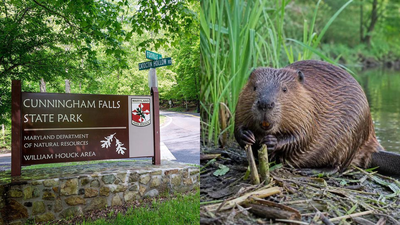
At Cunningham Falls State Park, two people experienced beaver bites that resulted in positive rabies tests for both animals involved. Consequently, park authorities have restricted access to water areas to ensure public safety. Ongoing surveillance is focused on assessing the rabies situation, and restrictions will persist until health officials confirm that the park is safe…

Read More

US mosquito numbers have crashed during a historic drought, but scientists say fewer mosquitoes can still mean a higher risk of West Nile virus | World News

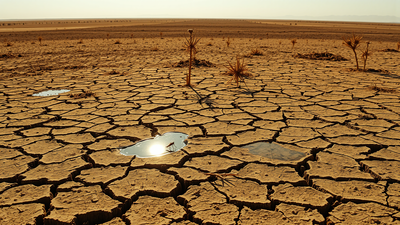
Representative Image of dry environmental conditions affecting mosquito numbers and public health (AI-generated image) Mosquitoes have all but vanished from parts of the United States this summer, and residents in states like Minnesota say they cannot remember a season this quiet. A historic drought sweeping through the West and Midwest has cut mosquito populations by…

Read More

Boston: In the 1990s, Boston sent nearly a quarter of the Big Dig’s 16 million cubic yards of soil to a burning former dump island and helped turn it into a park

Areas once linked to the old city dump were transformed with trees, shrubs and grasses. (Boston preservationa alliance photo) When Boston began work on the Central Artery/Tunnel Project, better known as the Big Dig, in 1991, it was taking on one of the biggest infrastructure projects in the city’s history. The project was planned to…

Read More

A half-mile solar strip floats above an irrigation canal in Gujarat, generating 1.6 million kilowatt-hours of power while saving 2.38 million gallons of water from evaporation

When it comes to solar panels, they are usually spread across rooftops or open fields where they serve more purposes than just providing energy. But near Chandrasan village in the western Indian state of Gujarat, a roughly 2,460-foot ribbon of panels sits above moving irrigation water, turning an existing canal into both a power site…

Read More

Scientists trained honeybees to recognise human faces, showing how tiny brains can distinguish faces by the arrangement of their features |

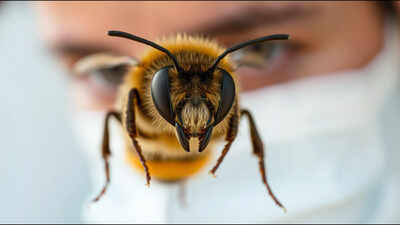
Honeybees can be trained with nothing more than the promise of a sugary reward; they learn to pick out a specific face and keep picking it out later, even when it appears from a slightly different angle or sits among faces they have never encountered before. It is a strange and slightly humbling discovery, not…

Read More

New Jersey: 8-foot Burmese python found under a New Jersey family’s shed with a swollen belly, X-ray reveals its shocking last meal | World News

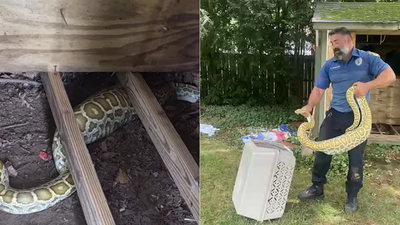
A large Burmese python was discovered hiding beneath a New Jersey family’s shed. Animal control officers carefully removed the reptile after dismantling part of the structure. An X-ray revealed the snake’s swollen belly contained a recently swallowed opossum. Officials suspect the exotic pet was abandoned by its previous owner. The SPCA warns against releasing such…

Read More