










Scientists used children’s ‘silly sprinklers’ to solve a physics problem Richard Feynman could not; the reverse version spins 50 times slower

False-color particles reveal water flowing into a reverse sprinkler, making the invisible movement of fluid clearly visible.Photo credit: NYU’s Applied Mathematics Laboratory If you’ve ever watched a “silly sprinkler” in action (those bright, looping contraptions that twist and spray water in wild patterns) you’ve probably just seen them as summer fun. But a group of…

Read More

Earth: Earth has regulated its climate for 60 million years through a hidden ocean feedback; the key was sea level and one essential nutrient

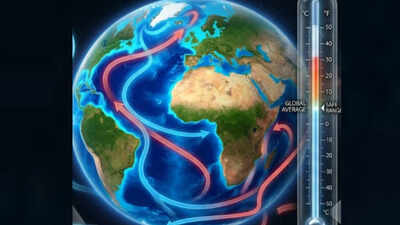
Earth’s natural system keep its climate from being too hot or too cold. (Representational photo_ Earth has gone through many periods of warming and cooling over its long history. Despite these changes, the planet has remained capable of supporting life for hundreds of millions of years. Scientists have long believed that Earth has a natural…

Read More

Astronomers just spotted erythrulose, the tastiest sugar found in some berries here on Earth, and why this discovery could change how we search for life in space

Whenever the idea of searching for life beyond Earth comes into picture, two key elements that are always a priority are water and oxygen. Now, astronomers have added another intriguing ingredient to the list: sugar. The latest research highlights that now scientists have discovered erythrulose, a naturally occurring four-carbon sugar found in raspberries, kiwis and…

Read More

Tiny plastics in drinking water may help harmful bacteria form stronger biofilms that resist disinfectants, raising new concerns for water treatment systems

If you’ve followed the growing conversation around plastic pollution, you’ve probably heard of microplastics. They are tiny fragments of plastic found in oceans, soils, food, and even the human body. But there’s an even smaller, less visible category that’s now drawing attention: Nanoplastics. And new research suggests they don’t just affect what we ingest; they…

Read More

Dinosaur Extinction: Scientists identify rare ‘oddball’ meteorite behind mass extinction of dinosaurs 66 million years ago

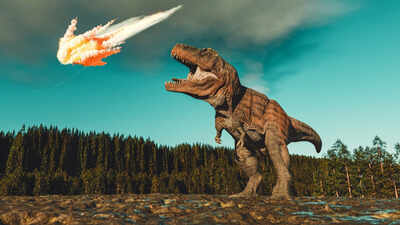
66 million years ago, dinosaurs, the apex predators, roamed the Earth, dominating the land, sea, and sky. Scientists have known for decades that these magnificent creatures were wiped out after a massive meteorite struck Earth. However, they were unsure about what type of projectile delivered such an impact, wiping out 75 per cent of Earth’s…

Read More

Third Cell To Grow Hair: Japanese scientists discover a ‘third cell’ that helps regrow hair naturally; new study promises an effective solution for hair loss

Japanese scientists may have found a crucial missing piece in the puzzle of hair loss. It looks as though the prayers of people struggling with thinning hair are finally being answered. Scientists at Japan’s RIKEN Institute and the Tokyo-based OrganTech have discovered a previously unknown ‘third cell’ that can fully reconstruct hair follicles, potentially clearing…

Read More

Florida is planting 15,000 milkweeds along highways to help monarch butterflies; the unused roadsides could become a 10,200-acre wildlife corridor

Officials in Florida have planted 15,000 milkweed plants along roadsides to help monarch butterflies survive. If you have driven through rural roads in northern Florida recently, you may have noticed new wildflower signs and patches of orange flowers growing along the roadside. These are not just for decoration. They are part of a large conservation…

Read More

Residents kept reporting dolphins in two Japanese bays. Underwater microphones revealed how frequently they visit

Scientists monitored dolphins in two bays along Sea of Japan coast. (Representational photo) People living along Japan’s Sea of Japan coast had been saying for years that they occasionally spotted dolphins close to shore. Local fishers also reported seeing them from time to time. These sightings were interesting, but scientists did not have enough information…

Read More

Quote of the day by Democritus: ‘If your desires are not great, a little will seem much to you; for small appetite makes poverty equivalent to wealth’ and the forgotten philosophy that true wealth begins with controlling your desires

‘If your desires are not great, a little will seem much to you’ Imagine standing in front of a vending machine or browsing an online marketplace, surrounded by thousands of choices created to encourage instant buying. A person purchases a slightly improved phone, feels a short moment of happiness, and soon starts looking forward to…

Read More