










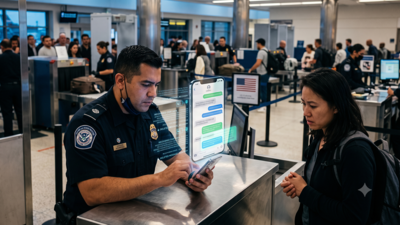
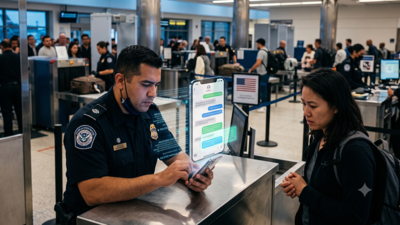
A recent Instagram video by immigration attorney Deepak Ahluwalia has raised questions about whether US border officials can recover deleted messages from travellers’ phones during airport inspections. In the video, Ahluwalia claims that a client entering the US through San Francisco International Airport had permanently deleted messages that were recovered and reviewed during an inspection by US Customs and Border Protection (CBP).“Can ICE or CBP read your deleted messages? The answer is yes,” Ahluwalia said in the video. He added that, according to the client, CBP officers recovered messages that were not linked to any cloud service and had been permanently deleted, and that those messages were later used in deciding the individual’s entry into the US. However, CBP’s policy does not specifically state whether deleted messages can be recovered during a border search, but it does outline what officers are permitted and not permitted to do when examining electronic devices.
What CBP can do with electronic devices at airports
Under CBP’s Border Search of Electronic Devices directive, officers may inspect electronic devices, including mobile phones, tablets, laptops, smartwatches, cameras, and storage devices, as part of border inspections conducted when people enter or leave the US. The searches are intended to support customs, immigration, law enforcement and homeland security responsibilities. The directive allows officers to conduct two types of searches:
- Basic search: Officers may review information stored on a device without requiring reasonable suspicion.
- Advanced search: Officers may connect external equipment to copy or analyse a device’s contents, but only when there is reasonable suspicion of a violation of laws enforced by CBP or a national security concern. Advanced searches also require supervisory approval.
CBP may also request that travellers unlock their devices or provide passcodes to facilitate an inspection. If officers cannot inspect a passcode-protected or encrypted device, they may detain it while determining how to proceed.
What CBP cannot do during a border search
The directive also places limits on electronic device searches. According to the policy, officers may not intentionally access information stored solely remotely, such as data stored only in cloud storage. To avoid accessing remote information, officers are instructed to ask travellers to place devices in airplane mode and disable Wi-Fi and Bluetooth, or disable network connectivity themselves when necessary. The directive further states that passcodes obtained during an inspection may be used only to inspect the device and the information stored on it. They cannot be used to access information that exists only remotely, and any recorded passcodes should be deleted or destroyed once they are no longer needed for the search.
Can CBP recover deleted messages
CBP’s directive does not specifically address whether officers can recover permanently deleted messages from electronic devices or whether forensic tools may be used to do so.However, the policy permits advanced searches involving external equipment to analyse device contents when legal requirements are met, and it also allows CBP to seek technical assistance if a device is encrypted or otherwise not readily accessible. Because the directive does not explicitly discuss deleted messages, it does not confirm or deny whether such information can be recovered during a border inspection.
ICE and CBP follow different policies
The directive also notes that it applies to searches conducted by CBP. Searches performed by US Immigration and Customs Enforcement (ICE), including Homeland Security Investigations (HSI), are governed by ICE’s own policies and procedures. If CBP transfers a device or copied information to HSI for further analysis, ICE policies apply after HSI receives the device or information.