










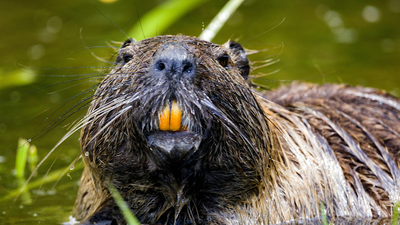
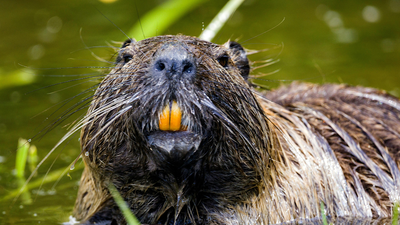
For generations, beavers were a familiar part of the Tule River Tribe’s ancestral lands in California’s southern Sierra Nevada. Tribal elders remembered seeing them in high-elevation meadows, and ancient pictographs estimated to be between 500 and 1,000 years old depict the animals alongside the South Fork Tule River.But after decades of trapping and habitat changes, the beavers disappeared from the reservation altogether. In June 2024, that changed when a family of seven North American beavers was released into the South Fork Tule River watershed as part of a long-term restoration effort led by the Tule River Tribe and the California Department of Fish and Wildlife (CDFW).Two years later, the reintroduction continues to be recognised as a landmark example of how bringing back a single native species can help restore water, wildlife and ecological resilience across an entire landscape.
Once abundant across the watershed, beavers gradually vanished from Tribal lands
Long before European settlement, beavers were widespread throughout California’s rivers and wetlands, where their dams shaped entire ecosystems. On the Tule River Indian Reservation, they were once common enough to become part of the Tribe’s cultural heritage, with beaver pictographs carved centuries ago at Painted Rock serving as enduring evidence of their presence.According to the Sierra Nevada Alliance’s report Beavers are Back on Tule River Tribe Lands in the Southern Sierra Nevada, tribal elders recalled seeing beavers when they were young. Yet by the early 21st century, the animals had been absent from the reservation for decades, leaving streams without one of nature’s most effective ecosystem engineers.
Why the Tribe spent nearly a decade working to bring beavers home
The return of beavers was far from a spontaneous wildlife release. Tribal leaders spent nearly ten years researching, planning and advocating for their reintroduction before the project became possible through CDFW’s Beaver Restoration Program, launched in 2022.A family of seven beavers, three adults, one yearling and three kits, was released into the South Fork Tule River watershed in June 2024. The project formed part of a broader strategy to restore natural watershed processes rather than relying solely on engineered infrastructure.For Tribe member and former Tribal Councilman Kenneth McDarment, the inspiration came from the landscape itself. Reflecting on years of recurring drought, he explained that the answer lay in the ancient beaver pictographs preserved on Tribal land, a reminder that the watershed had once functioned with beavers as an integral part of its ecology.
How seven beavers reshaped an entire river system
Although small in number, the beavers have the potential to transform large sections of the watershed. By building dams from branches, logs and mud, beavers naturally slow the flow of water, creating ponds and wetlands that store water long after winter snow has melted. These wetlands recharge groundwater, reduce erosion, trap sediment and keep streams flowing during dry periods.These changes are expected to improve drought resilience, increase summer streamflow and strengthen the Tribe’s drinking water supply, around 80 per cent of which comes from the Tule River watershed. Beaver ponds also create cooler aquatic habitats that are increasingly valuable as temperatures rise across California.
The benefits extend far beyond the beavers themselves
Restoring beavers means restoring habitat for countless other species. CDFW biologists expect the expanding network of wetlands to improve conditions for several threatened and sensitive animals, including the foothill yellow-legged frog, southern mountain yellow-legged frog, western pond turtle, least Bell’s vireo and southwestern willow flycatcher. These species depend on healthy riparian habitats that have become increasingly rare across much of California.Beavers function as ecosystem engineers because the structures they build create diverse habitats that support fish, amphibians, birds, insects and mammals simultaneously.
A return that reconnects culture, conservation and climate resilience
However, the introduction of the beavers means much more than bringing back a native species. The reintroduction helps restore the connection between the Tule River Tribe and the animals that played an integral part of its culture through time while simultaneously providing a natural way to deal with environmental issues facing the world today.With droughts becoming more frequent and snowpack becoming smaller and wildfires growing in their destructiveness, the beaver provides services that cannot be performed in the same non-stop fashion and at the same relatively small costs as those provided by any other machine.While the family of seven introduced in 2024 may have just been the start, if the colony thrives and expands, one day, many beavers may become permanent engineers of the South Fork Tule River, just as they used to before disappearing centuries ago. According to the Sierra Nevada Alliance, their introduction will mean much more than the reintroduction of a species, but the restoration of the process that helped sustain both the land and its people through generations.