









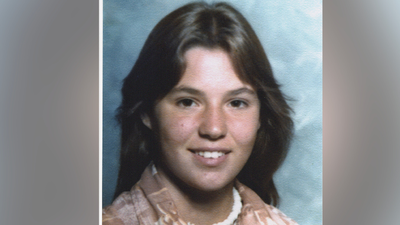
Nearly five decades after a teenage girl was discovered buried in a shallow grave beneath a California vineyard, investigators have finally restored her identity through advances in forensic DNA technology. The victim, known only as “Arvin Jane Doe” for 48 years, has been identified as Michelle Louise Collier, who disappeared from Fresno at the age of 15 in February 1978. Her identification has brought long-awaited answers to a grieving family that spent decades wondering what had happened to her. While the breakthrough offers a measure of closure, it has also reignited a cold-case homicide investigation as authorities work to uncover who killed the teenager and why.
Michelle Collier vanished in 1978 and became California’s ‘Arvin Jane Doe’
Michelle Louise Collier disappeared from Fresno, California, in February 1978 when she was just 15 years old. Four months later, on June 21, a tractor operator cultivating a vineyard near South Wheeler Ridge Road outside Arvin uncovered skeletal remains buried in a shallow grave. An autopsy determined the victim had been murdered, but investigators were unable to identify her using the forensic techniques available at the time. With no name to pursue, the case gradually went cold and the teenager became known simply as “Arvin Jane Doe.”
Decades of investigation finally led to a DNA breakthrough
Investigators never stopped revisiting the case as forensic science continued to advance. In 2007, Michelle’s remains were exhumed from Arvin Cemetery so detectives could obtain a DNA sample, but the technology and available databases still could not identify her. A forensic anthropologist later estimated that the victim was between 15 and 24 years old, while the National Center for Missing & Exploited Children created a facial reconstruction in the hope that someone would recognise her. Despite those efforts, the mystery remained unsolved for years.
Forensic genetic genealogy finally gave the teenager her name back
The breakthrough came in 2025 when the Kern County Sheriff’s Office partnered with Texas-based forensic laboratory Othram to use forensic investigative genetic genealogy. Scientists developed a comprehensive DNA profile from Michelle’s remains and traced potential relatives through genealogy databases. Detectives then collected a DNA sample from her mother, Maria Collier, confirming that the unidentified homicide victim was her missing daughter. Family members later revealed that DNA previously submitted by Michelle’s half-brother, sister-in-law and cousin also helped investigators build the family tree that ultimately led to her identification.
Family delivers an emotional message to Michelle’s killer
Michelle’s older sister, Cynthia Dunbar, spoke publicly after learning what had happened to her sister nearly 48 years earlier. She said the family had spent decades searching for answers and that finally knowing Michelle’s fate had brought them a sense of closure, even though the truth was devastating. During an emotional news conference, Dunbar addressed the person responsible for Michelle’s death directly, saying the killer’s actions had forever changed their family and warning that investigators would continue searching for those responsible, whether they were alive or deceased.
Michelle was finally brought home after nearly five decades
Following the DNA confirmation in October 2025, Michelle’s remains were removed from Arvin Cemetery in April 2026 and returned to her family for a proper burial. Speaking through tears, Dunbar apologised to her younger sister for not being able to protect her and said Michelle was finally reunited with their late father. The family described the reburial as a chance to honour the teenager after she had spent nearly half a century buried without her name.
The murder investigation has entered a new chapter
Although Michelle’s identity has finally been established, detectives emphasise that the homicide investigation is far from over. Authorities still do not know how she was killed, who was responsible or what happened between her disappearance from Fresno and the discovery of her body in rural Kern County. Investigators believe identifying the victim fundamentally changes the case because they can now reconstruct Michelle’s final weeks, interview people who knew her and pursue leads that were impossible when she was simply an unidentified Jane Doe.
How forensic genealogy is transforming decades-old cold cases
Michelle Collier’s identification highlights the growing role of forensic genetic genealogy in solving some of America’s oldest mysteries. By combining advanced DNA sequencing with traditional genealogical research, investigators have identified hundreds of previously unknown victims and suspects whose cases had remained unsolved for decades. For Michelle’s family, the technology has ended 48 years of uncertainty. For detectives, it marks the beginning of a renewed search for answers and, they hope, the person who took the life of a 15-year-old girl nearly half a century ago.