








World Hepatitis Day: In 1885, a mysterious outbreak after smallpox vaccination led doctors to investigate hepatitis, a medical puzzle that took decades to solve |

The history of hepatitis shows that scientific breakthroughs rarely happen overnight. For thousands of years, people saw yellow eyes, dark urine and unexplained liver disease, but no one knew what caused them. Ancient Chinese writings described outbreaks of jaundice nearly 5,000 years ago. Babylonian records also mention similar illnesses more than 2,500 years ago. Yet…

Read More

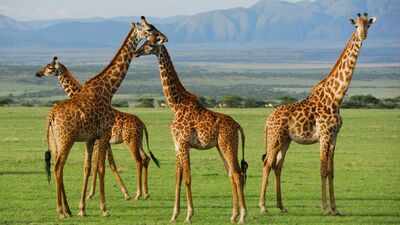
In the early 1980s, poaching wiped out all wildlife in this Ugandan reserve, now 12 giraffes are being brought back to save them from oil drilling

On a chilly morning in Uganda’s largest national park, rangers did more than prepare for a conservation mission: they prepared to protect the future of one of Africa’s most iconic animals. With quiet coordination, a few songs, and a great deal of expertise, wildlife officials began moving 12 endangered Nubian giraffes from Murchison Falls National…

Read More

A late NFL owner’s collection sold for more than $105 million, with one guitar fetching $14.55 million | NFL News

Late Colts owner’s Jim Irsay Collection sets $105M record, largest sale in memorabilia history The private memorabilia collection of late NFL team owner Jim Irsay has set an all-time auction record, generating more than $105 million across a series of highly competitive sales. As confirmed by auction house Christie’s, the months-long undertaking concluded on 1…

Read More

In 1622, a Spanish ship sank off Florida carrying silver and gold, but divers have just found the first silver bar from the wreck in nearly 30 years | World News

Off the coast of Key West, a crew of treasure divers just pulled up something that had not come out of the water in almost thirty years. Working the wreck site of the Nuestra Señora de Atocha, a Spanish galleon that sank in a hurricane back in 1622, divers with Mel Fisher’s Shipwreck Expeditions recovered…

Read More

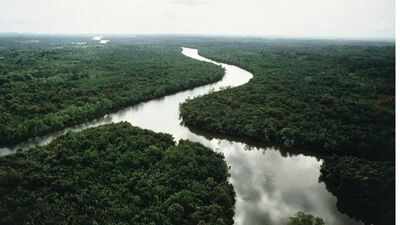
In 2003, China planted small islands of native trees along a degraded river; 20 years later they held only 19–30% of an intact forest’s diversity and biomass

Tropical forests have been heavily degraded because of human activities. (Representational photo) Planting trees across vast areas may not be the only way to restore damaged tropical forests, according to a new study. Instead, small patches of native trees can gradually help degraded forests recover.The study was carried out by Xishuangbanna Tropical Botanical Garden (XTBG)…

Read More

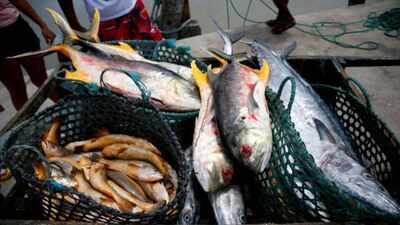
Scientists discover four dangerous fish bacteria in Brazil for the first time; one has jumped to a new host species

For the first time, Brazil faces a significant challenge as bacteria previously exclusive to Asia and the USA have been identified within its borders. These bacteria, known to cause columnaris disease, pose an acute risk to the thriving aquaculture sector. Researchers have isolated four species from the Flavobacterium genus, which can infect both Nile tilapia…

Read More