







In 1997, a mysterious sound echoed across the Pacific. Years later, scientists traced the ‘Bloop’ to Antarctica |

The deep ocean has a way of turning ordinary events into unanswered questions. Far below the waves, sounds travel through water in ways that can make distant sources appear much closer or far stranger than they really are. In 1997, a powerful low-frequency noise recorded across the Pacific Ocean created one of the most unusual…


Read More

How Iran’s military ran a $4bn gambling network as part of a sanctions-dodging op: Report

IRGC has been using an online gambling network to evade Western sanctions, Reuters report A sophisticated $4 billion sanctions-evasion network has allegedly helped Iran move money through illegal online gambling operations, cryptocurrency transactions and an unlicensed Dubai-based crypto exchange. The network gave sanctioned Iranian entities access to global cryptocurrency markets despite Western restrictions, according to…

Read More

Punjab man Gurpreet Singh added to FBI’s ‘most wanted’ over alleged drug trafficking, illegal arms trade | World News

An Indian national from Punjab has been added to the US Federal Bureau of Investigation’s (FBI) Most Wanted list over his alleged involvement in an international organised crime network accused of drug trafficking, firearms offences and racketeering.According to the FBI, Gurpreet Singh is wanted for his alleged role in the Jaggu Bhagwanpuria Organised Crime Group,…

Read More

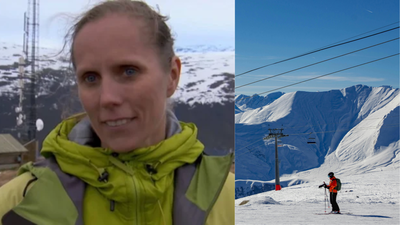
A Swedish doctor spent 80 minutes trapped beneath river ice. Months later, she returned to work after one of medicine’s most extraordinary recoveries | World News

Image(s): Left/Nine/Right/Canva Most people who suffer cardiac arrest after prolonged submersion in icy water have little chance of survival. Yet in one of the most remarkable medical recoveries ever recorded, Anna Bågenholm, a Swedish radiologist, survived after becoming trapped beneath a frozen river in Norway for 80 minutes, during which her heart stopped beating for…

Read More

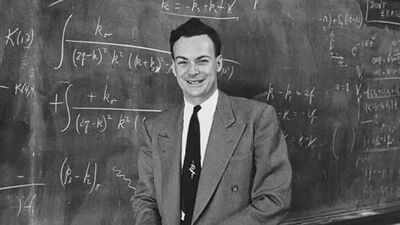
Quote of the day by Richard Feynman: “The first principle is that you must not fool yourself and…” |

Richard Feynman’s most enduring quote was never intended as a memorable slogan. It came from his 1974 commencement address at the California Institute of Technology, where the Nobel Prize-winning physicist spoke about the principles that should guide scientific research. Among his remarks, one sentence has outlived the rest: “The first principle is that you must…

Read More

A Massachusetts mother helped save one of America’s dirtiest rivers. Her campaign paved the way for landmark clean water laws | World News

Representative Image of a river restored after a landmark clean water campaign (AI-generated image) In 1962, Marion Stoddart moved with her husband and three young children to Groton, Massachusetts, settling less than a mile from the Nashua River. At the time, the Nashua ranked among the ten most polluted rivers in the United States, running…

Read More

Indian national in US on visitor visa jailed for $3.7 million fraud scheme targeting elders | World News

An Indian national has been sentenced to four years in prison in the United States for his role in a cross-border fraud scheme that targeted elderly Americans and laundered millions of dollars obtained through impersonation scams.According to the US Attorney’s Office for the Eastern District of Wisconsin, 22-year-old Roshan Shah was sentenced by US District…

Read More

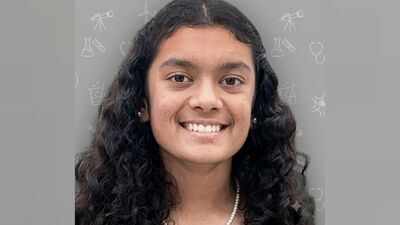
Eeg: San Diego student Sharvi Mahajan, 14, designed an EEG-based AI system to predict driver fatigue and microsleep; she is now competing for a $25,000 science prize

Fourteen-year-old Sharvi Mahajan has developed NeuroDrive Alert (Picture: Young Scientist Lab) Sharvi Mahajan, a 14-year-old Indian-American student from California, has been named among the 10 finalists of the 2026 3M Young Scientist Challenge. Mahajan has developed a system to predict driver fatigue before it leads to accidents.Sharvi, an eighth-grade student at Bernardo Heights Middle School,…

Read More

A PhD student spent 400 hours counting caterpillars under streetlights. His findings changed what scientists knew about LED lighting |

Over three summers, a doctoral researcher named Douglas Boyes spent more than 400 hours crouched beside English roadside hedges after dark, tapping branches with a stick and counting how many moth caterpillars fell onto a canvas tray below. Boyes, who split his time between Newcastle University and the UK Centre for Ecology and Hydrology, expected…

Read More