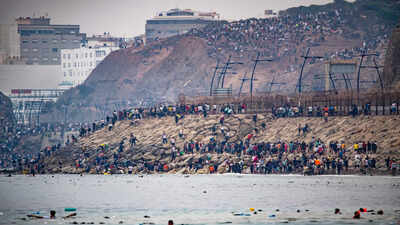







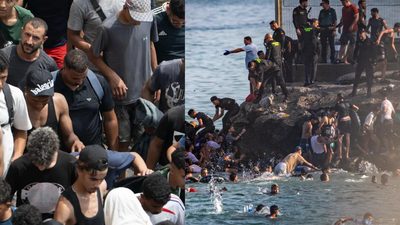
‘Go that way’: Migrants say Moroccan authorities directed them towards Spain’s Ceuta

Thousands of migrants rushed to Cueta; many later returned Multiple Moroccan migrants who crossed into Spain’s North African enclave of Ceuta this week claimed they were encouraged by Moroccan authorities and social media messages claiming the border was open. Meanwhile, Spain moved to reinforce the enclave’s border after the unprecedented influx that has now left…

Read More

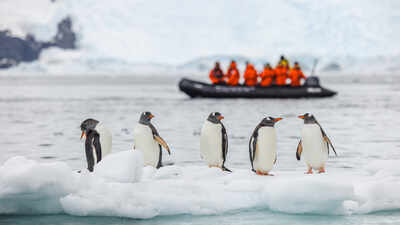
A 14-kilometre iceberg cut off food supply to an Antarctic penguin colony, and chick numbers dropped by 69% in one breeding season

How one iceberg changed everything for Antarctic penguin colony When it comes to nature, it often reminds us that even the smallest change in the environment can ripple through an entire ecosystem. According to experts, in Antarctica, life depends on a fine balance of sea ice, open water and seasonal rhythms. A lone iceberg has…

Read More

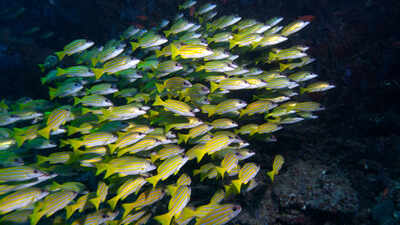
In 1869, the Suez Canal connected the Red Sea to the Mediterranean; over 150 years later, 120 fish species have crossed and scientists predict the next three

More than 120 fish species have migrated from the Red Sea into the Mediterranean Since the Suez Canal opened more than 150 years ago, more than 120 fish species have migrated from the Red Sea into the Mediterranean. Researchers at Tel Aviv University have now created a statistical model that predicts which species are likely…

Read More

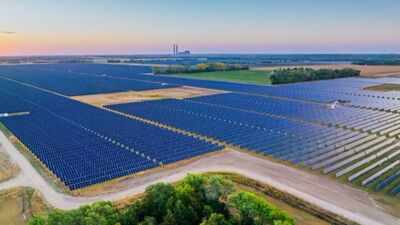
Minnesota’s largest coal plant once burned 30,000 tonnes daily; its existing wires now carry 710MW from 1.7 million solar panels powering about 150,000 homes

America is retiring coal plants slowly and steadily. The boilers are cut up for scrap, the smokestacks get dropped on camera and the land tends to sit in permitting limbo for a decade. But in Becker, Minnesota, the state’s biggest coal plant is being used, not for all this hardware but for a plug.On July…

Read More

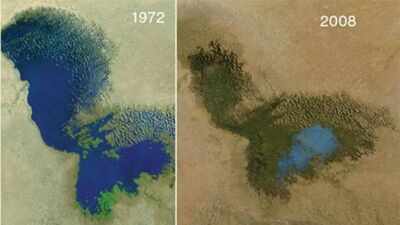
Africa’s Lake Chad has shrunk by 90% since 1960, now the government is paying $50 billion to redirect water from the Congo River Basin into the lake

In 1823, British explorers Hugh Clapperton, Dixon Denham and Walter Oudney were some of the first Europeans to document the lake and the surrounding kingdoms. He was struck at the sight of one of Africa’s largest inland lakes. But two centuries later, about 905 of the lake’s surface area has shrunk, leaving only a sliver…

Read More

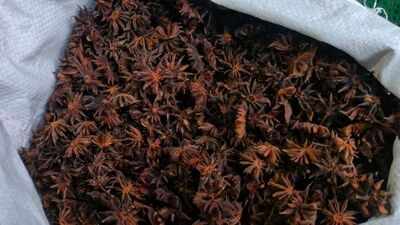
In Indian Himalayas, a wild spice is helping 200 families protect 100 sq km of forest while generating an income of Rs 39 lakh

For generations, indigenous communities in Arunachal Pradesh had been using a spice in their food for its citrusy, tongue-tingling flavour. The native plant was a part of their world and that’s all they knew. But today, the small spice is helping 200 families gain a livelihood while also protecting agricultural land.On autumn mornings, residents of…

Read More

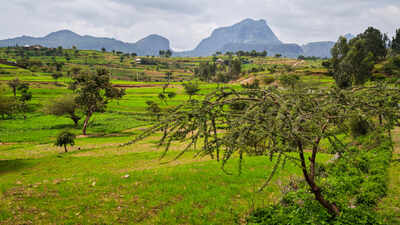
Around 150 BCE, Aksum rose along Red Sea trade routes; researchers say surviving Tigray grapevines may preserve part of that ancient agricultural legacy

A lost chapter in the history of Ethiopia agriculture Picture yourself wandering through a tranquil village in the northern Ethiopian highlands, a gnarled grapevine sheltering from the afternoon sun over a stone courtyard. It is a familiar part of daily life for local families, a source of sweet fruit, a place to gather, and a…

Read More

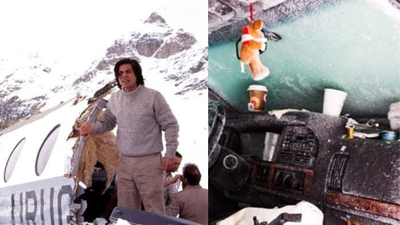
This 44-year-old Swedish man survived being buried beneath a metre of snow for nearly two months against all odds | World News

Image: Left/The Telegraph/Right/The Guardian In December 2011, a 44-year-old Swedish man named Peter Skyllberg disappeared while driving through the country’s frozen north. Weeks passed with no sign of him as winter temperatures plunged well below freezing. Then, in February 2012, a group of snowmobilers spotted what looked like the roof of a car protruding from…

Read More