








Brazil’s Snake Island is home to just two snake species, including one of the world’s most venomous pit vipers | World News

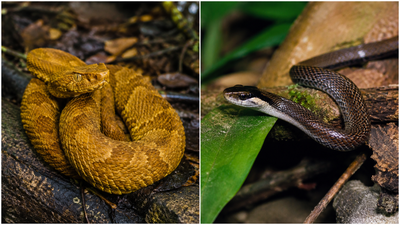
Image: Left/Golden lancehead (Bothrops insularis)/Right/Dipsas albifrons (Sauvage’s snail-eating snake)/AI Generated About 33 kilometres off the coast of São Paulo lies Ilha da Queimada Grande, better known as Snake Island. Shrouded in myths of deadly encounters and pirate treasure, the island has earned a fearsome reputation as one of the most snake-infested places on Earth. While…

Read More

Meet Akshath Anand, the Surrey Grade 9 student who built a wearable device that detects IV leaks before swelling begins; his first national science fair ended with gold

Grade 9 student, Akshat Anand, wins gold for wearable that detects IV leaks earlyPhoto credit: Surrey Schools At just 13 or 14 years old, most Grade 9 students are still getting comfortable with science fair pressure. Akshath Anand of Surrey Academy of Innovative Learning did something far bigger: he walked into the Canada-Wide Science Fair…

Read More

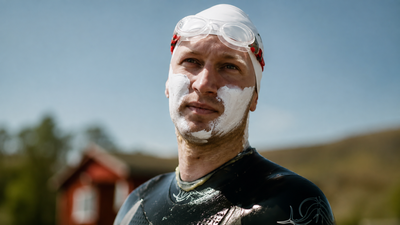
Polish swimmer becomes the first person to swim from Sweden to Poland across the Baltic Sea in 55 hours | World News

In a historic feat, Bartłomiej Kubkowski, an ultra-swimmer from Poland, became the first person to successfully swim across the Baltic Sea from Sweden to Poland without any physical help. Making it to the other side in 55 hours and 10 minutes, Kubkowski completed the 160-kilometre trek under very difficult conditions. Swimming through the cold water…

Read More

Scientists placed 42 sea sponges in a polluted Spanish port. 455 days later, one species had thrived while four others died |

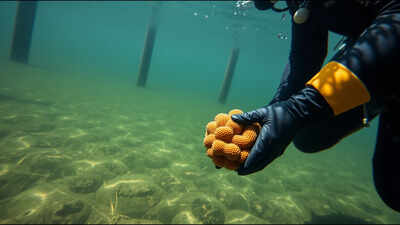
Representative Image of marine life thriving around resilient chicken kidney sponges in polluted waters (AI-generated image) Researchers in Spain spent 455 days tracking how sponges from five species of Mediterranean sea life coped with being moved from clean, natural habitats toward a heavily polluted recreational marina near Girona. The experiment was designed to test a…

Read More

After Japan’s devastating 2011 tsunami, volunteers have planted more than 680,000 trees to protect the coast from future tsunamis | World News

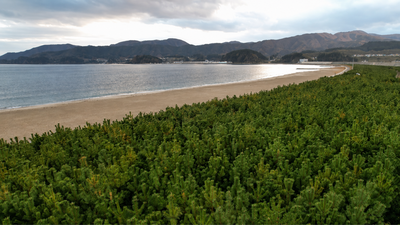
When a magnitude 9.0 earthquake and the devastating tsunami that followed struck Japan’s north-eastern coast in March 2011, entire towns were swept away, nearly 20,000 people were killed or went missing, and vast stretches of coastline were left in ruins. In the years since, Japan has invested billions of yen in massive concrete seawalls, but…

Read More

‘Operation Eau de Fraud’: Chicago YouTuber charged after replacing luxury perfumes with modeling clay in return scam; police seize $250,000 worth of fragrances | World News

Image: Phillip Carter/ Youtube A Chicago YouTuber known for reviewing luxury fragrances has been charged after authorities accused him of carrying out an elaborate return fraud scheme involving expensive designer perfumes. According to the Cook County Sheriff’s Office, investigators say Philip Carter, 30, purchased high-end fragrances online, removed the original bottles, replaced them with modeling…

Read More

Lithops werneri: The tiny Namibian plant that survives by disguising itself as a pebble. Fewer than 200 now remain in the wild |

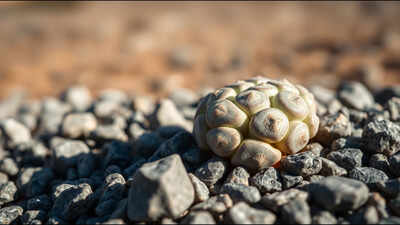
Representative Image of Lithops werneri camouflaged among grey stones in Namibia’s Erongo Mountains (AI-generated image) In a small patch of Namibia’s Erongo Mountains, a tiny succulent grows so convincingly disguised as a pebble that most people would walk straight past it without a second glance. This plant, Lithops werneri, survives by mimicking the grey, weathered…

Read More

California’s winter monarch migration has collapsed from millions in the 1990s to 12,260 butterflies in 2025; the third-lowest count ever recorded |

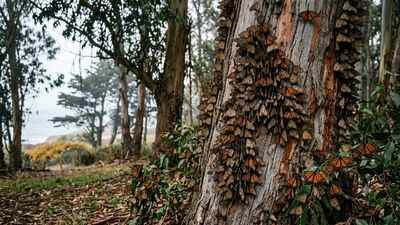
This winter’s survey of the western monarch butterfly revealed over 12,000 individuals, a small rise from last year. Despite this slight increase, conservationists remain alarmed as numbers are still critically low. Ongoing challenges such as habitat loss and environmental stressors severely impact the butterfly population. Conservation initiatives are actively working on restoring habitats and engaging…

Read More

Scientists discover three new stomach bacteria after 21 years of research that may be linked to chronic stomach disease in pygmy sperm whales |

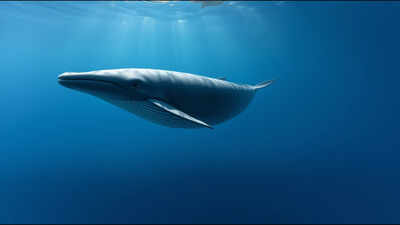
Pygmy Sperm Whale’s Deep Dive (AI-generated image) Pygmy sperm whales are among the least studied large mammals in the ocean, spending nearly their entire lives far offshore, diving deep to hunt squid and fish, and rarely surfacing long enough to be observed alive. Most of what scientists know about the species comes instead from whales…

Read More

Scientists identify an insect-eating plant that just proved Charles Darwin’s 150-year-old theory right

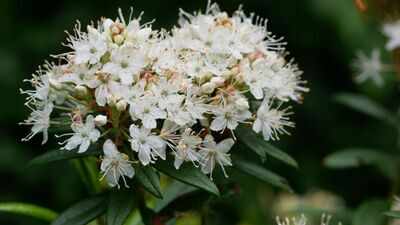
A breakthrough in plant science has validated Charles Darwin’s historic conjecture surrounding carnivorous Saxifraga species. Researchers discovered that these plants ensnare small gnats with sticky hairs, emitting fragrances that lure their prey. Chemical tests confirmed that insects provide essential nutrients upon capture, as showcased by isotope labeling. This pivotal finding sheds light on the complex…

Read More