









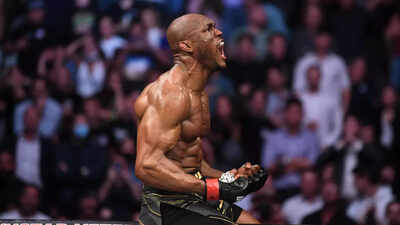
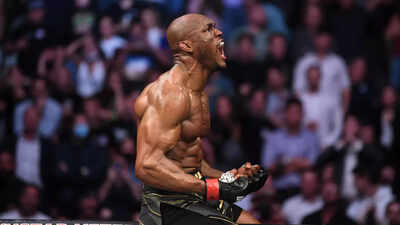
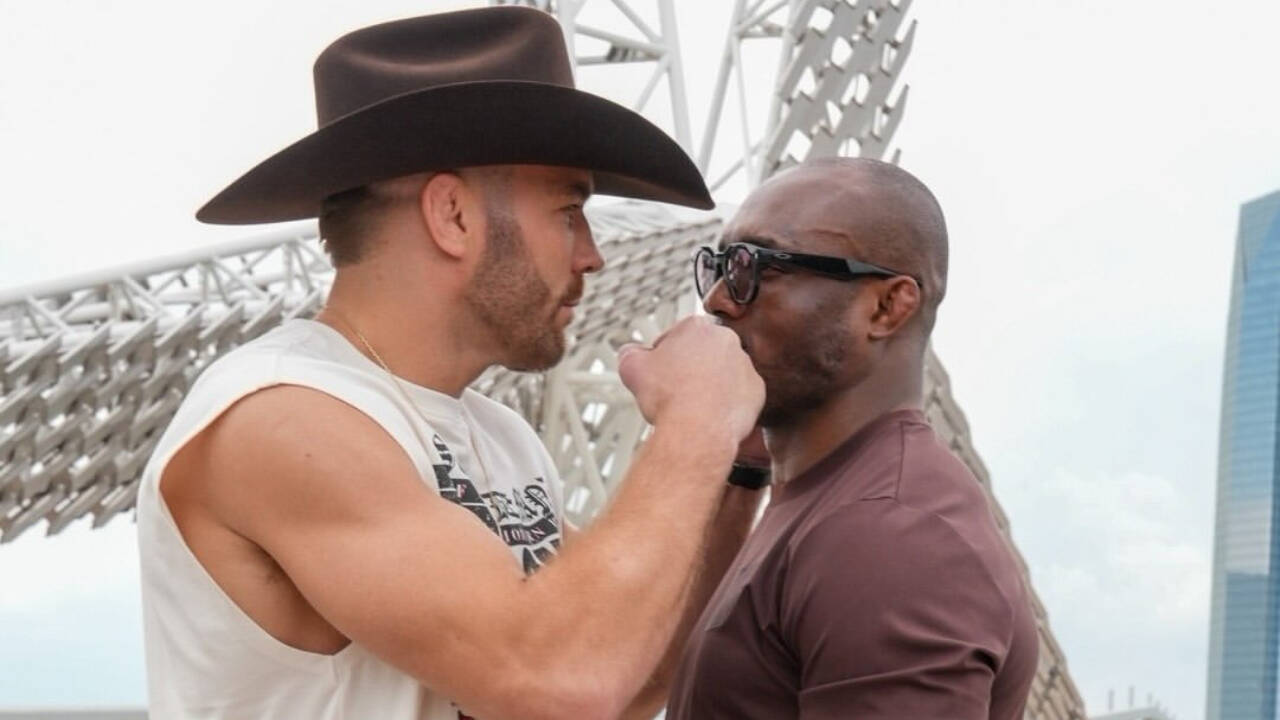
Nearly four years after losing the welterweight championship he held for more than three years, Kamaru Usman believes he still has enough left to become a two-division UFC champion.Saturday night’s UFC Fight Night main event at the Paycom Center in Oklahoma City on July 19 against former middleweight champion Dricus Du Plessis is the next step in that pursuit and, in Usman’s mind, a victory should leave him one fight away from another shot at UFC gold. For the 39-year-old, that ambition has changed the way he views his career.“Yes, every fight from this point on has to be meaningful because I’m not just here to be part of this anymore. I’m here to accomplish something before I eventually transition away from the sport.“This is a huge fight. He’s a former champion in this division, which is still a new division for me. Anytime you’re able to get a fight of this magnitude against the No. 2-ranked guy in the world, it’s significant. Once I go out there and get this win, what’s next besides the title? So it’s a big one, and I’m excited for it,” Usman told Timesofindia.com.
The road back to contention
The pursuit of another championship also explains why Usman has fought only sparingly over the last few years.His dominant welterweight reign ended dramatically in August 2022 when Leon Edwards landed a fifth-round head kick to claim the title. Seven months later, Edwards edged a closely fought rematch by majority decision.Usman then stepped in on less than two weeks’ notice to face Khamzat Chimaev at UFC 294, moving up to middleweight and losing a competitive majority decision. He stayed away from competition for nearly 20 months before returning in June 2025 with a commanding five-round victory over Joaquin Buckley, a performance that revived his hopes of another title run.While many saw the layoff as inactivity, Usman says there was more to it than simply waiting for another fight.“Of course, activity is the biggest indicator of all. Unfortunately, I’m at a stage in my career where I would like to be more active, but it has to make sense – not just for me, but the opponent has to make sense, and, most importantly, it has to make sense for the company. Unfortunately, that hasn’t always been the case, which is why people haven’t seen me compete as often. But I’m just blessed to have the opportunity to be here.“Time away from the Octagon, he says, also changed the way he approaches fighting.“I would say it’s learning how to build a fight. When you’re young in the game, you’re just in there and it’s a chaotic experience. But over time, you learn how to settle into a fight much sooner and understand what’s happening. I would say that’s probably been my biggest improvement.”Although his first appearance at middleweight came on short notice against Chimaev, Usman believes this camp has allowed him to better apply those lessons.“Well, this was kind of short notice as well. It was announced not too long ago.“But I feel good. Being able to prepare is always a great thing. Like I said, the biggest lesson I’ve learned during this time away is how to build a fight. Hopefully, we’re able to go out there and show that on Saturday night.”
The Du Plessis test
Standing across from him is a very different challenge.Du Plessis has built his rise through the middleweight division on relentless pressure, constant forward movement and physicality. The South African has described himself as the division’s most physically dominant fighter, and even in defeat to Chimaev last year continued pushing forward despite being repeatedly taken down and controlled by one of the UFC’s elite wrestlers.Wrestling proved decisive that night, an area Du Plessis has acknowledged he has worked on heading into another meeting with a decorated grappler.Usman, whose NCAA Division II wrestling credentials laid the foundation for one of the most dominant welterweight title reigns in UFC history, believes the contest will come down to far more than physical strength.“No, he is big and he’s physical. That’s one of the biggest things about him. What really makes him stand out is his toughness, his determination, and his willingness to keep fighting and keep pushing.
“But that’s never really been an area where I’ve struggled. It’s never been a case of me not pushing forward or not fighting hard. That’s one of my strengths as well.“I think it’s going to come down to who takes tactical control of the fight and is able to maintain it,” said Usman.Asked whether Chimaev’s victory had revealed a blueprint to beat Du Plessis, Usman acknowledged there were areas he could exploit, but insisted he would rely on his own strengths rather than copy someone else’s approach.“Well, he’s tough. But of course, everyone watched his last fight and saw that there was an area that Khamzat exploited completely.“I excel in that area as well, but I’m not going into this fight thinking, ‘Yeah, I need to do exactly that.’ I just need to go out there and fight my fight.“I think one of the things I do better than anyone else is my ability to mix everything together. As long as I go out there, do my thing, and mix it up, I think it’ll be a great night.”Usman has already thought beyond Saturday. If he gets past Du Plessis, he wants a title shot against Sean Strickland.“Hopefully, Sean Strickland. I mean, what’s next? You beat the No. 2 guy, a former champion – why not fight the champion?“He and I have already shared the cage before. I think that’s the biggest fight in the division. With all due respect to the other guys at the top, I believe myself versus the champion is the biggest fight the division can make.”The two previously met in 2017 when both competed at welterweight, with Usman earning a unanimous decision victory. Their careers have since taken very different paths. Usman went on to become one of the most dominant champions in UFC welterweight history, defending the title five times before losing it to Edwards.Strickland gained success at middleweight, captured the UFC title and established himself among the division’s leading contenders. A second meeting would now come with championship stakes attached.Away from the technical aspects of fighting, Usman says one of the defining characteristics of his career has been an unwillingness to pretend he is something he is not.“I’m very rational and very honest with myself. If I’m not good at something, I’m not one of those guys who’s going to come out and lie to the public by saying, ‘Oh yeah, I’m the best at this.’“People always say, ‘Fake it till you make it,’ but I’m really not one of those guys. If I’m not there yet, I’m not going to pretend that I am. I’m going to go out there, put in the work, and then I’ll let you know what I’m capable of.”That same honesty extends to what goes through his mind before every fight.“It always affects you because you’ve invested so much time and effort with your coaches, trainers, physical therapists, nutritionists, and everyone else involved. You’ve also sacrificed time with your family.“Of course, you want all of those people to experience the reward for everything they’ve put into helping you. You don’t want to lose and have them feel like all that work didn’t pay off.“Absolutely, by the time you step into the cage, one of the biggest thoughts in your mind is, ‘I don’t want to lose this one. I can’t lose this one.’“I’ve dealt with that before. I’ve been there, I’ve done that, and I have the experience. Now we’re just excited to go out there once again and perform.”Whether that next title opportunity comes immediately or not will largely depend on Saturday night’s result. But for Usman, there is little ambiguity about why he is still fighting.As for how he hopes people remember him when his career eventually ends, the answer has little to do with championship belts.“I hope the biggest thing people say is that I was a truly high-class individual—not just in the sport, but outside of it as well.“That’s who I am. That’s how I was raised. That’s how I train, and that’s how I conduct myself in every aspect of this game.“I hope that comes across, and I hope people recognize it and respect it.”