







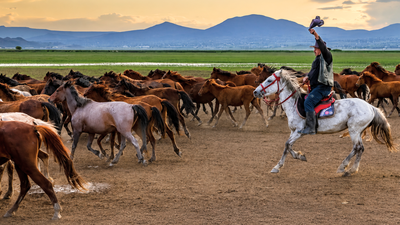
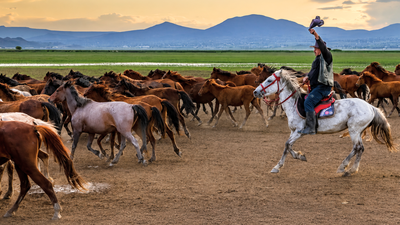
Turkey’s Cappadocia region is famous for its fairy chimneys and hot air balloons, but another attraction has quietly become a symbol of the region. Every afternoon, local cowboys gather free-roaming Yılkı horses and lead them through Cappadocia’s valleys for guided photography experiences, drawing visitors from around the world. What began as a way to showcase the region’s iconic horses has evolved into a tourism model that provides local communities with an economic incentive to protect the animals and the landscapes they roam. Rather than removing the horses from the wild, the initiative allows them to remain free while creating new opportunities for conservation through sustainable tourism.
Who are Cappadocia’s free-roaming horses?
The horses are known locally as Yılkı horses, a term used in Turkey for horses that roam freely after no longer being needed for agricultural work. Historically, farmers released these animals when mechanisation reduced their role in farming, allowing them to survive independently across Cappadocia’s volcanic valleys and plateaus.Over time, many of these horses adapted to life in the wild, moving in herds through the region’s rugged landscape. Their presence has become closely associated with Cappadocia’s identity, alongside its distinctive rock formations and sunrise balloon flights.
How local cowboys turned them into a tourism attraction
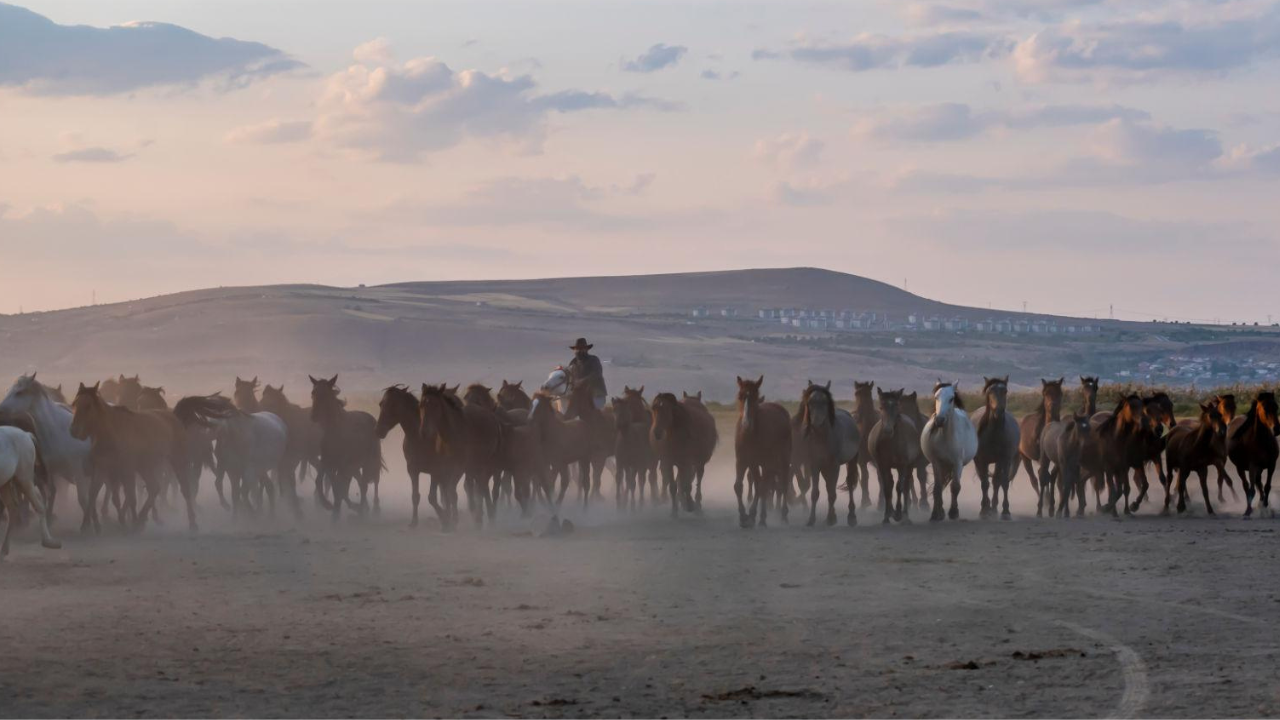
Rather than capturing or domesticating the horses, local horsemen, often referred to as cowboys, gather selected herds each afternoon and guide them through scenic valleys where photographers and visitors can watch them run against Cappadocia’s dramatic backdrop.Tour operators organise these guided experiences around sunrise and sunset, when the soft light, airborne hot air balloons and clouds of dust kicked up by the galloping horses create striking images. Visitors pay to join the tours, generating income for local guides, horse owners and nearby businesses.The horses are then released to continue roaming freely, making the experience different from conventional animal attractions where wildlife is kept in enclosed areas.
How tourism is helping preserve the iconic herds
The growing popularity of these photography tours has given local communities a financial reason to maintain the free-roaming horse tradition instead of abandoning it.Income from tourism supports the care of the horses and encourages residents to continue protecting the valleys where the animals live. While the horses still face challenges such as harsh winters, changing land use and reduced grazing areas, the tourism industry has increased awareness of their cultural importance and provided a sustainable source of revenue linked to their preservation.Many visitors specifically travel to Cappadocia to witness the horses running through the valleys, reinforcing their value as part of the region’s natural and cultural heritage.
Why Cappadocia provides the perfect backdrop
Cappadocia’s landscape was shaped millions of years ago by volcanic eruptions that left behind soft volcanic rock. Wind and water erosion gradually carved this terrain into the famous fairy chimneys, caves and valleys seen today.Against this unique landscape, the sight of dozens of horses galloping beneath colourful hot air balloons has become one of the region’s most recognisable scenes. Photographers often visit during the golden hours of sunrise and sunset, when lighting conditions are ideal and balloon flights are at their peak.
A centuries-old bond between horses and Anatolia
Horses have played an important role in Anatolian culture for centuries, serving as companions for transport, farming and trade long before modern machinery replaced them. The Yılkı horse tradition reflects that history, preserving a connection between local communities and animals that once formed an essential part of rural life.Although these horses are no longer relied upon for agricultural work, they remain an enduring symbol of the region’s heritage and continue to attract visitors eager to experience a living piece of Cappadocia’s history.
Tourism and conservation working together
The Cappadocia horse tours demonstrate how tourism can support conservation without removing animals from their natural environment. By creating economic value around the free-roaming herds, local cowboys have helped transform the horses into one of the region’s most distinctive attractions while encouraging their long-term preservation.As interest in responsible wildlife tourism continues to grow, Cappadocia’s free-roaming horses have become an example of how cultural traditions, local livelihoods and conservation efforts can work together to protect a unique landscape and the animals that define it.