









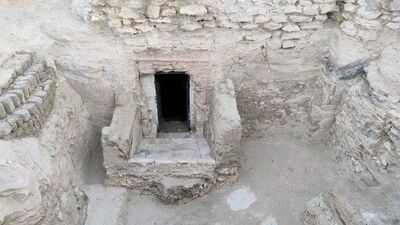
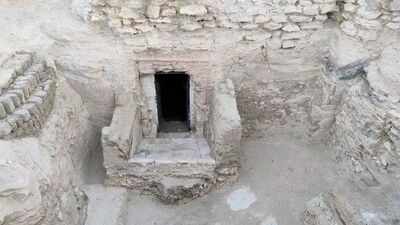
Archaeologists have uncovered a 3,000-year-old tomb near Luxor, Egypt revealing fresh insights into the country’s ancient past. The tomb, discovered in the Sheikh Abd el-Qurna necropolis on Luxor’s West Bank is believed to have belonged to a senior official named Paser, who lived during the Ramesside period. The identification comes from inscriptions carved on the tomb’s walls, offering archaeologists valuable clues about its owner and the era in which he lived. According to Egypt’s Ministry of Tourism and Antiquities, a Dutch archaeological mission from Leiden University made the discovery. The team of archaeologists will work further to identify the people buried there and learn more about them.
Inscriptions identify the tomb’s owner
The tomb dates back to the Ramesside period (around 1292–1069 BCE), a time that includes Egypt’s 19th and 20th Dynasties and some of the civilisation’s most powerful rulers, including Ramses II. Although the tomb had suffered damage over the centuries and parts of its structure had deteriorated, archaeologists were able to identify its owner through surviving hieroglyphic inscriptions. These inscriptions indicate that the tomb belonged to Paser, a man who held several prestigious titles including Mayor of Thebes and Overseer of the Temple of Amun. Such positions suggest he was an influential administrator responsible for overseeing both civic affairs and important religious institutions in ancient Egypt. According to the researchers, the inscriptions reveal Paser’s identity and provide a better understanding of the political and religious hierarchy of the Ramesside era.

Image Credit: Facebook/ @Egypt’s State Information Service
Tomb features reveal ancient burial customs
The structure itself includes an open courtyard followed by a number of rooms and underground chambers for burial. Although built thousands of years ago, several architectural and decorative details have been preserved, helping archaeologists learn about the burials of officials from the period of the New Kingdom.Hieroglyphs and carvings on the walls depict funerary practices and beliefs concerning the afterlife. Like many high-ranking officials of the time, Paser’s tomb was designed not only as a burial place but also as a sacred space where rituals were performed to ensure a safe journey into the next world.Archaeologists believe that a further exploration of the chambers could uncover artifacts that reveal more information about Paser’s life and the administrative system of ancient Thebes.

Image Credit: Facebook/ @Egypt’s State Information Service
Luxor continues to yield remarkable discoveries
Luxor, known in antiquity as Thebes, is one of the world’s most significant archaeological regions. Home to monuments such as the Valley of the Kings, Karnak Temple and Luxor Temple, the area continues to produce discoveries that deepen historians’ understanding of ancient Egyptian civilisation. In recent years, excavations around Luxor have uncovered royal tombs, burial shafts, mummies, temples and ancient settlements highlighting the region’s extraordinary archaeological wealth. Such discoveries not only advance historical research but also strengthen efforts to preserve the country’s cultural heritage and promote archaeological tourism. The newly discovered tomb of Paser adds another important piece to the puzzle of ancient Egypt, providing rare evidence of the lives of powerful officials who helped govern one of the civilisation’s most influential cities.