








“In nature nothing exists alone,” wrote renowned environmentalist Rachel Carson in her 1962 book Silent Spring highlighting the intricate connections that bind every living organism to its surroundings.But climate change is increasingly disrupting this balance. Rising temperatures, melting glaciers, devastating floods, prolonged droughts and extreme weather events are threatening ecosystems, livelihoods and economies across the world.As these impacts intensify, governments face the challenge of not only limiting global warming but also protecting vulnerable communities and mobilising resources to help them adapt.Against this backdrop, world leaders, scientists, policymakers and climate activists will gather in Antalya, Turkey, from November 9 to 20 for the 31st United Nations Climate Change Conference or COP31.With climate finance, fossil fuel dependence, emissions reduction and adaptation taking centre stage, COP31 will test whether countries can turn years of promises into concrete action.
What is COP31 and why is it important?
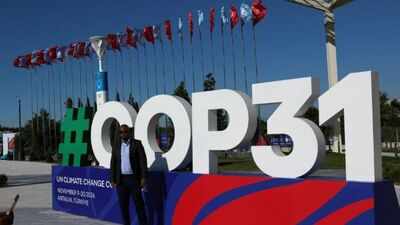
COP31 stands for the 31st Conference of the Parties to the United Nations Framework Convention on Climate Change (UNFCCC), an international treaty adopted in 1992.The annual summit allows governments to review progress, strengthen climate commitments and agree on measures to cut emissions and support vulnerable communities.It has produced landmark agreements such as the 1997 Kyoto Protocol and the 2015 Paris Agreement, which aims to limit global warming to well below 2°C while pursuing efforts to keep it to 1.5°C above pre-industrial levels.Turkey will host COP31 from November 9 to 20 in Antalya. Murat Kurum has been nominated as conference president, while Australia’s Chris Bowen will lead negotiations. The World Leaders’ Summit is scheduled for November 11 and 12.The COP31 presidency has announced three targets for 2035:
- Electrification: Increase electricity’s share of final energy demand from just over 20% to 35%.
- Waste: Halve the growth in global waste.
- Resilient cities: Cut energy consumption intensity in buildings by at least 25%.
Other priorities include reducing methane emissions, improving climate education and mobilising climate finance.
Climate finance: The money gap
One of the biggest challenges facing developing countries is the lack of adequate funding to prepare for and respond to climate change.According to the United Nations Environment Programme’s (UNEP) latest Adaptation Gap Report, developing countries will need around $305 billion annually by 2035 to meet their climate adaptation requirements. Taking future inflation into account, the figure could rise to approximately $420 billion.In comparison, the collective pledge by developed countries to triple international public finance flows for adaptation could deliver only $85 billion to $120 billion annually by 2035 — covering just 20-29% of the estimated requirement.The actual funding provided is even lower. Developed countries contributed only $28.2 billion to $31.7 billion in adaptation finance in 2024, around $1 billion more than the previous year. In effect, developing countries receive only about 10 cents for every dollar they need to adapt to climate change.“The world is not ready to adapt to current climatic conditions, never mind what overshoot of 1.5 degrees Celsius will bring,” said Inger Andersen, executive director of UNEP.At COP29 in Baku, countries agreed to mobilise at least $300 billion annually in climate finance for developing nations by 2035. At COP30 in Brazil, they agreed to triple adaptation finance to $120 billion annually by 2035, from the earlier $40 billion target.However, questions remain over how the promised funds will be mobilised, who will contribute and how quickly the money will reach vulnerable countries. These issues are expected to feature prominently in Antalya.
Fossil fuels: The phaseout debate
The future of coal, oil and gas remains one of the most contentious issues in international climate negotiations. Fossil fuels are the largest source of human-induced global warming, but countries remain divided over how quickly they should move away from them.At COP30 in Belém, Brazil, countries failed to reach a consensus on a formal roadmap for transitioning away from fossil fuels or halting deforestation.The Brazilian presidency subsequently announced two separate roadmaps in its own capacity, backed by around 90 countries. These covered a just and orderly transition away from fossil fuels and efforts to halt and reverse deforestation.Although the announcements were not part of the formal COP30 decisions, they kept both issues on the international climate agenda.At COP31, Germany and the European Union are expected to push for fresh momentum on a global phaseout of fossil fuels. Ahead of the summit, German Environment minister Carsten Schneider said the transition would benefit the climate while helping countries strengthen their economies and reduce dependence on energy imports.However, major oil-producing nations, including Saudi Arabia, have repeatedly resisted agreements that could undermine their fossil fuel industries.China, despite rapidly expanding wind and solar energy, has traditionally opposed external interference in its domestic energy policy. These differences could make a consensus difficult once again.
India’s stand: CBAM, fossil fuels and national priorities
India will remain committed to protecting its domestic industry against unilateral trade barriers such as the European Union’s Carbon Border Adjustment Mechanism (CBAM) and will not support any move to phase out fossil fuels, keeping in mind the country’s energy requirements and development goals, Union environment minister Bhupender Yadav said on November 3.Yadav said India would play a “constructive and bridge-building role”, pushing for an outcome that shifts the focus from commitments to implementation and support.The Turkish presidency has invited Prime Minister Narendra Modi to the leaders’ summit on November 11-12. However, it is not yet clear whether he will attend.India has opposed the EU’s CBAM, arguing that the unilateral measure would impose an additional burden on businesses in developing economies by taking into account the embedded emissions in their products.The mechanism, which entered its operational phase on January 1, imposes a carbon price on imports of carbon-intensive goods such as iron and steel, aluminium and cement entering the 27-nation European Union. It aims to prevent carbon leakage by ensuring that imported goods face a carbon cost comparable to that borne by products manufactured within the bloc.Other Brics members have also voiced opposition. At the annual summit held under India’s chairship in September, countries including China, Russia, South Africa and Brazil described CBAM and similar trade barriers as “unilateral, punitive, discriminatory and protectionist measures”.Yadav said climate finance would be a key priority for India at COP31. The country will seek a decision at the conference to begin the Climate Finance Work Programme.
The 1.5°C target and emissions gap
The Paris Agreement’s 1.5-degree Celsius target remains a central reference point for international climate negotiations. However, recent scientific assessments suggest that the world is likely to temporarily cross this threshold within the next few years.UN projections warn that even if existing national commitments are fully implemented, temperatures could rise by up to 2.6 degrees Celsius. Atmospheric greenhouse gas levels are also at record highs.According to the World Meteorological Organization, carbon dioxide concentrations reached a new peak in 2025, alongside record levels of methane and nitrous oxide.Since the 1960s, the annual growth rate of atmospheric carbon dioxide has tripled, rising from an average of 0.8 parts per million (ppm) to 2.4 ppm between 2011 and 2020.However, experts point to progress since the Paris Agreement, particularly the expansion of renewable energy and policies aimed at cutting emissions.Yet, the challenge of adapting to the impacts of rising temperatures remains immense. “The world is not ready to adapt to current climatic conditions, never mind what overshoot of 1.5 degrees Celsius will bring,” said Inger Andersen, executive director of UNEP.UN Secretary-General Antonio Guterres, however, has stressed that temporarily crossing the 1.5-degree threshold does not mean the climate fight is over.“Overshoot is not surrender. We can still keep it as small and as short as possible — and bring temperatures back below 1.5 degrees by the end of the century,” he said.
Melting glaciers and flash floods
Climate change is increasingly visible through extreme weather events, with devastating consequences for communities. Severe droughts, extreme heat, wildfires and falling water levels affected several parts of Europe during the summer.In August, flash floods triggered by a rock-ice avalanche in Nepal and Tibet washed away villages, killing more than 1,400 people and leaving thousands missing.An ICCI-UNEP report, Overshoot and the Cryosphere, warns that temporarily crossing the 1.5-degree threshold could accelerate the loss of glaciers and ice sheets, threatening communities far beyond polar and mountain regions.James Kirkham, chief scientist at the International Cryosphere Climate Initiative and coordinating lead author of the report, told PTI that hundreds of millions of people could be affected by rising sea levels.He also warned that the loss of mountain glaciers could create water shortages, affecting agriculture, drinking water, irrigation and electricity generation.The risks are particularly significant for countries such as India and Nepal, where communities depend on Himalayan glaciers and snowmelt.Kirkham highlighted the importance of early warning systems, improved monitoring and cross-border data sharing to minimise disaster impacts.“It’s a global problem, and it requires a global response to limit emissions, slow the rate of loss and build resilience, often across borders,” he added.
AI, clean energy and the changing climate agenda
COP31 will also address newer challenges emerging from the rapid expansion of technology, particularly artificial intelligence and data centres.Growing demand for computing power has raised concerns about electricity consumption, water use and the environmental footprint of digital infrastructure.Ahead of the conference, leaders released the Antalya Artificial Intelligence Pledge, inviting countries and organisations to voluntarily address AI’s environmental impact.COP31 President-designate Murat Kurum has called for greater transparency over AI’s energy consumption.“We must openly discuss AI’s growing energy consumption, and it is time for governments to start setting the terms. We expect companies to be transparent about their energy use and to power their operations with clean energy,” Kurum said.The pledge is expected to encourage discussions on powering data centres with renewable energy and disclosing their energy and water consumption.
Is US not sending an official delegation?
The absence of an official Trump administration delegation is another significant aspect of COP31.US President Donald Trump signed an executive order on the first day of his second term in January 2025 announcing the country’s withdrawal from the Paris Agreement for a second time.His administration has also initiated the process of withdrawing the US from the UNFCCC, following another executive order signed on January 7. The withdrawal is expected to become official next year.However, the absence of federal representation does not mean the US will be entirely missing from the conference. More than 100 American leaders, including governors, mayors, state and local officials, scientists and climate advocates, are expected to participate through organisations such as America Is All In, Climate Mayors and the US Climate Alliance, said Gina McCarthy, America Is All In Chair and former White House National Climate Advisor.
What happened at the previous climate summit, COP30?
COP30 concluded in Belém, Brazil, with a compromise agreement that included a commitment to triple adaptation finance for developing countries by 2035.Countries also agreed to establish a two-year work programme on climate finance and launch the Global Implementation Accelerator, a process led by the COP30 and COP31 presidencies to help close the gap between existing national climate plans and the action required to limit global warming.A just transition mechanism was also agreed upon to promote international cooperation, technical assistance and capacity-building for workers and communities affected by the shift towards cleaner energy.Reacting to the outcome, UN climate change executive secretary Simon Stiell said: “We knew this COP would take place in stormy political waters. Denial, division and geopolitics has dealt international cooperation some heavy blows this year. But friends. COP30 showed that climate cooperation is alive and kicking, keeping humanity in the fight for a livable planet, with a firm resolve to keep 1.5 degree Celsius (of global average temperature rise above 1850-1900 levels) within reach.“COP31 will now have to build on these commitments and address the issues that remained unresolved in Brazil.
What will determine COP31’s success?
The Antalya summit comes at a time when climate impacts are becoming more severe and the gap between financial commitments and actual requirements remains substantial.For developing countries, the priority will be securing predictable and accessible funding for adaptation, loss and damage and climate-resilient infrastructure. Climate advocates will push for stronger emissions-reduction targets and a clearer pathway away from fossil fuels.The conference will also have to address the environmental costs of emerging technologies and ensure that the clean energy transition benefits workers, communities and vulnerable populations.COP31 offers countries an opportunity to move beyond declarations and demonstrate that international cooperation can deliver measurable results.