








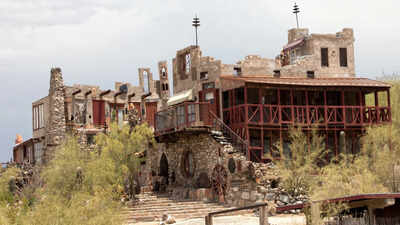
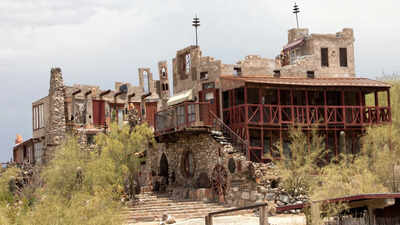
In the foothills of Phoenix’s South Mountain, an extraordinary house was built from materials most people would have thrown away. Between the 1930s and 1945, Boyce Luther Gulley gathered desert stone, rejected bricks, old railway materials, telephone poles, automobile parts and other discarded objects to build an 18-room castle for his daughter, Mary Lou. He worked largely by hand, shaping an eccentric three-level home into the desert landscape without a conventional architectural plan. What began as a private project became one of Phoenix’s most unusual landmarks.Today known as Mystery Castle, the structure stands as a striking example of vernacular architecture and an early exercise in material reuse. The National Trust for Historic Preservation says Gulley built the castle without formal architectural or engineering training, combining local materials, folk-art influences and recycled objects. The building eventually became a nationally recognised attraction, but its story began with a father separated from his young daughter and a promise connected to the sandcastles they had built together.From Seattle to the Arizona desertGulley was a Seattle businessman who had some training in architectural engineering. In the late 1920s, after being diagnosed with tuberculosis, he left his family and travelled to Phoenix, where the dry climate was then considered beneficial for people suffering from the disease. He eventually settled near South Mountain, at a time when the foothills were far less developed than they are today.Mary Lou had enjoyed building sandcastles with her father. The idea of creating something permanent may have stayed with Gulley after he moved west. Over the following years, he began assembling a house from whatever materials he could obtain. The National Trust dated construction of Mystery Castle to about 1934–1945. Architectural historians, however, noted that Gulley had begun building on the site earlier, with the structure evolving gradually rather than following a conventional construction plan. The result was a sprawling house that followed the contours of the hillside rather than imposing a regular architectural grid.A house assembled from what others rejectedThe castle’s unusual appearance was not simply the result of cheap materials. Gulley made the discarded objects part of the building’s design. Railroad components became structural or decorative elements, old bricks became architectural details, and stones were carefully arranged into walls, fireplaces, niches and platforms.Historical Archaeology has shown that reusing building materials is not exclusively a modern sustainability idea but has long existed within vernacular building traditions. Inside Mystery Castle, practicality and eccentricity frequently overlap. The 18 rooms include a chapel, a bar and a room known as Purgatory. The building contains 13 fireplaces and a network of stairways and unusual passages. Built-in furniture was incorporated directly into the masonry, while some windows and decorative features were made from salvaged materials.The result was a building in which almost every feature carried a story about its previous life. Materials that might otherwise have been overlooked or discarded were given new functions within the castle, making the structure as much a collection of reused objects as a home. Its unconventional construction also reflected Gulley’s determination to build according to his own ideas, without following the standard plans or materials used in conventional houses.
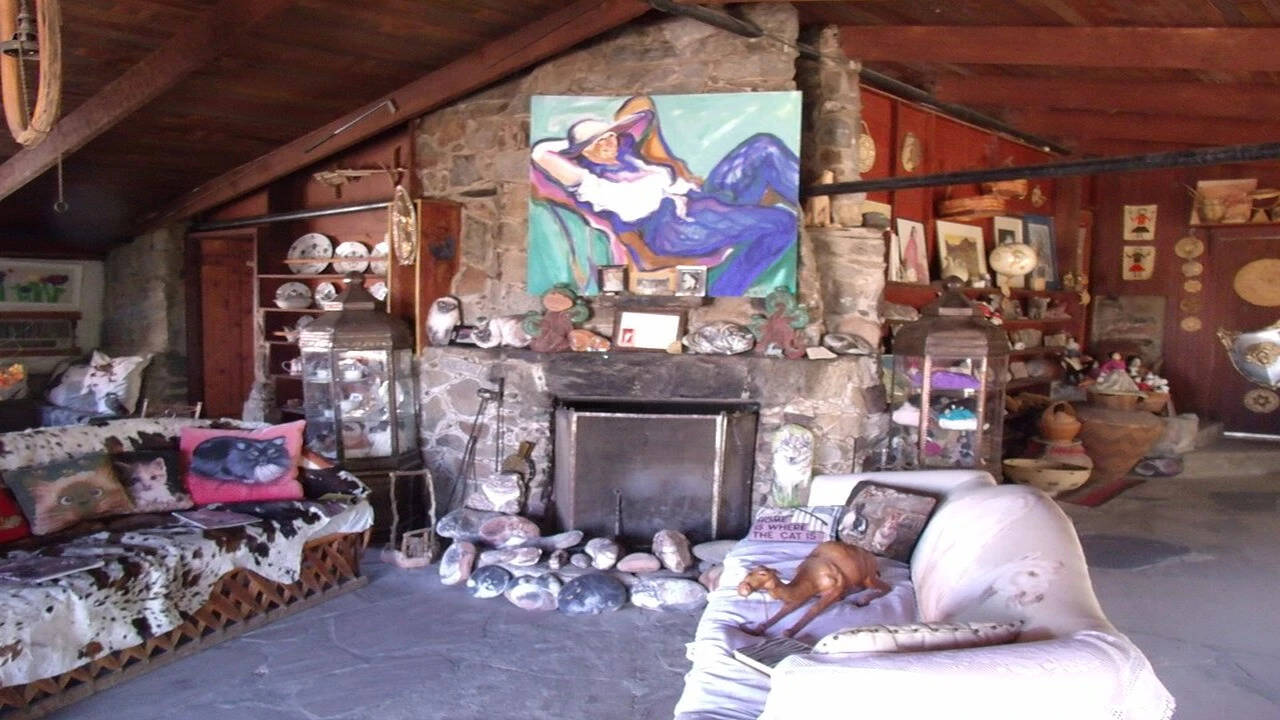
One of the eighteen rooms in the castle. Image credits: Wikipedia.
Mary Lou inherits the castleMary Lou was 22 when she learned that her father had left her the property. She and her mother, Frances, travelled to Arizona and moved into the castle. The castle soon acquired another identity. In 1948, LIFE magazine featured Mary Lou and the unusual house in a story that helped give it the name Mystery Castle. The attention drew curious visitors, and Mary Lou and her mother later began offering tours. For decades, Mary Lou became the property’s principal keeper and public guide, sharing the story of the building with visitors.Mary Lou died in 2010 after living at the castle for many decades. Before her death, she established a foundation to help preserve the property. The structure later faced another challenge. After vandalism and break-ins, Mystery Castle closed to the public in 2023, and a subsequent assessment found that stabilisation, repairs and accessibility improvements would cost about $3.3 million.In 2024, the National Trust for Historic Preservation placed Mystery Castle on its list of America’s 11 Most Endangered Historic Places. The designation brought renewed attention to a building whose greatest strength and weakness are closely connected: it was built as a highly individual, handmade structure rather than a conventional one designed for easy maintenance. Rejected bricks, old metal, desert rock and salvaged household materials were given new purposes and assembled into something that could not have been produced from a standard building plan. What survived was not simply a house, but an intensely personal architectural landscape built piece by piece for a daughter who would spend much of her life caring for it.