









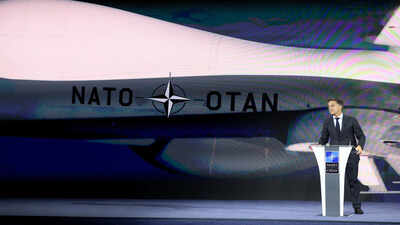
As the NATO summit kicks off in Ankara, the capital of Türkiye, issues related to defence spending have once again come to the fore. US President Donald Trump has been pressuring fellow NATO members to increase their defence budgets. The pressure on European members to increase spending has also increased as Trump has repeatedly threatened to pull the United States, the most powerful military and economy in the bloc, out of the alliance. With the conflict underway in Ukraine, many members of NATO are worried about a potential conflict with Russia. In June, the US Department of War had stated that it is evaluating its posture and troop levels in Europe as it seeks a more ‘balanced defence relation with NATO’, as it wants NATO to take more control of its own defence.
Europe’s efforts to assuage Trump
At the start of the summit, NATO General Secretary Mark Rutte tried to reduce US concerns about defence spending to US President Trump. Rutte projected the ‘Trump Trillion’, the $1.2 Trillion spent by European NATO members and Canada on defence since 2017, when Trump first came to office. NATO also announced a plan to replace the 14 AWACS aircraft owned by the alliance, these aircraft will be replaced by 10 SAAB GlobalEye surveillance aircraft.
Europe seeks to invest more in defence
Ahead of the NATO Summit, United Kingdom, Netherlands, Finland and Poland have restated their commitment to strengthen defence financing and make defence spending more efficient. These four countries have announced the development of the Multilateral Defence Mechanism (MDM), a new financing model designed to speed up defence investment, encourage joint procurement and combine demand for critical defence capabilities. The goal is to ensure that allied nations can meet their military needs more effectively. Treaty negotiations are expected to begin soon, with the ambition of establishing the MDM by 2027. Technical details have already been worked out with the help of a wider group of allies.To move the MDM forward, the UK, the Netherlands, Finland and Poland plan to expand the coalition of participants, advance the design and development phase with subscribed partners in the autumn, and ensure that new approaches to defence financing are aligned with NATO efforts. This alignment is intended to boost capability and interoperability among allies. The four countries emphasized their continued support for Ukraine’s sovereignty and resistance against Russian attacks. Poland is already spending more money as percentage of GDP on defence in the entire bloc.Defence financing will be a central topic at the NATO summit in Ankara. The MDM is one of several initiatives aimed at attract additional private investment into the defence sector. Another proposal that is being floated is the Defence, Security and Resilience Bank (DSR Bank), this would be an international financial institution headquartered in Canada. The DSRB is expected to provide loans to NATO member nations for investments in defence and security, it also aims to encourage private banks to invest more easily in defence firms, with the larger aim of strengthening NATO’s defensive capacity.These initiatives shine a spotlight on the efforts that NATO members are taking to prepare for a potential future threat, while at the same time supporting Ukraine in its ongoing struggle against Russia. The NATO summit at Ankara will serve as a key platform to discuss funding mechanisms and to build consensus on the best manner to arrange resources for collective defence.