










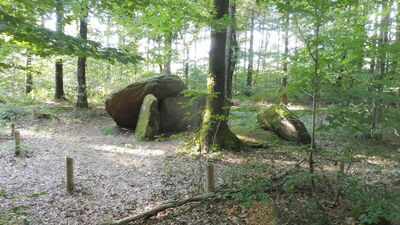
Archaeologists investigating a Neolithic cemetery in Brittany, France, may have uncovered clues to a burial tradition that dates back around 7,000 years. At the Coëby Neolithic cemetery near Trédion, researchers examined two unusually large, elongated earth mounds whose purpose has remained uncertain since the site was discovered in 1986.In a recent study published in ‘Archaeological Prospection,’ Philippe Gouézin and Vivien Mathé used electrical surveys to look beneath the surface of the two structures without excavating them. Their findings suggest that the mounds could contain stone-built burial chambers and unusual standing stones, including stones that may have been shaped to resemble people. The researchers say the structures could be related to a type of Neolithic funerary monument known as a Passy-type barrow, potentially extending the known distribution of this tradition further west.
How did archeologists look beneath the 7,000-year-old mounds
Instead of immediately digging into the ancient structures, the researchers used electrical surveys to investigate what could be hidden beneath the surface. The technique allowed them to examine differences in the material inside the mounds. In simple terms, electrical measurements can reveal areas where the ground behaves differently, helping archaeologists identify buried structures without having to disturb them.For the Coëby study, electrical surveys were carried out on two of the long barrows. The researchers were looking for evidence that could explain the internal construction of the mounds and help determine whether they were actually funerary monuments. The results produced patterns that were consistent with structures beneath the earth. According to the study, these findings could indicate arrangements similar to Passy-type monuments, including rough and anthropomorphic standing stones.
Could those Neolithic mounds have been burial monuments
The evidence points towards that possibility, although the researchers have been careful not to present it as a confirmed conclusion. The survey results suggest that the two long barrows may contain internal stone structures. Other interpretations include the possibility of stone clusters within the mounds. Taken together, these features make a funerary purpose increasingly plausible.This is important because the shape of the Coëby mounds does not immediately fit the more familiar image of a prehistoric burial monument. Rather than being simple piles of earth or stone, the structures appear to have been deliberately built and may have contained carefully arranged elements. The study therefore raises the possibility that the Coëby long barrows were part of a particular Neolithic burial tradition. The researchers say they could be comparable to Passy-type constructions, which are known from areas of northern France.
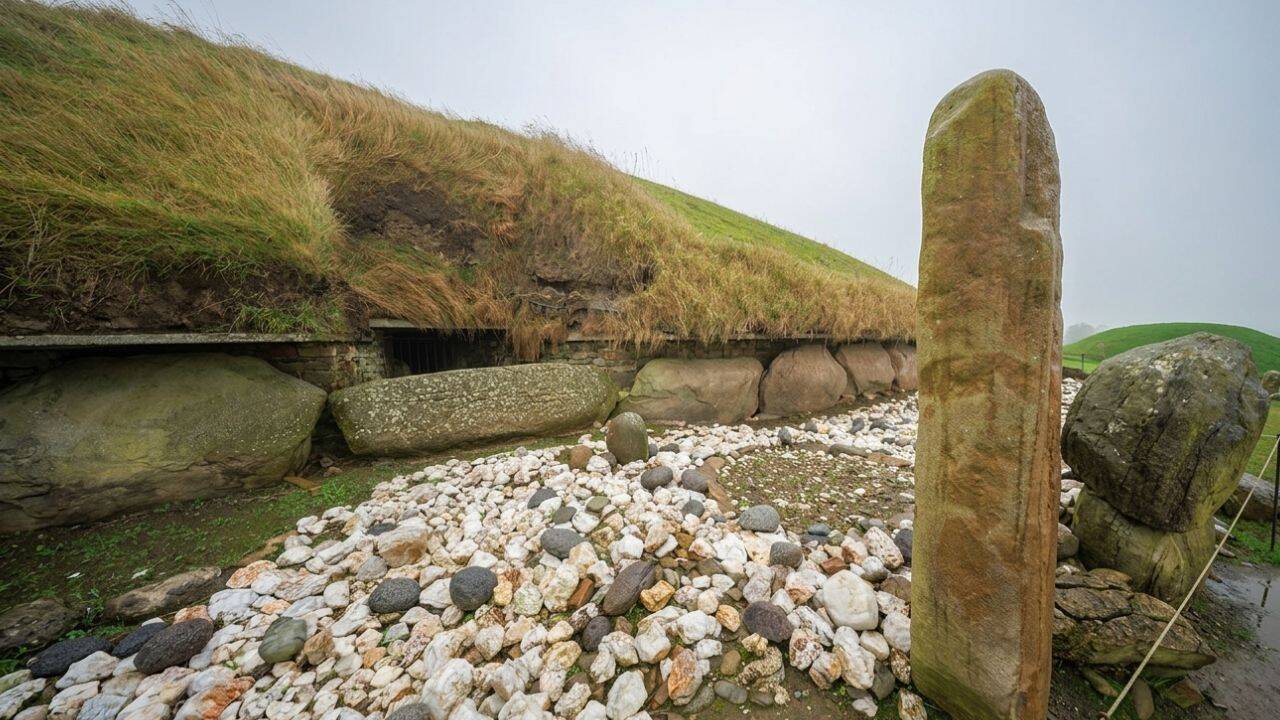
Image Credit: AI generated
What are Passy-type monuments
Passy-type monuments are a distinctive form of Neolithic burial structure associated with northern France. Their importance to the Coëby discovery comes from the similarities suggested by the electrical survey. The researchers note that Passy-type constructions are associated with elongated monuments covering unusual stone arrangements, including rough stones and stones with human-like forms.If the Coëby structures are confirmed as examples of this tradition, they could represent a significant geographical extension of where such monuments are known to have existed. That possibility gives the discovery a wider importance. It would not simply add two more prehistoric mounds to the cemetery. It could also show that ideas about how the dead were commemorated travelled across a broader part of Neolithic France than previously recognised.
What makes the standing stones present there so intriguing
One of the most puzzling elements is the presence of ‘standing stones’ within or around the long barrows. The research points to the possibility that some of these stones were anthropomorphic, meaning that they may have had forms resembling human figures. This is particularly interesting in a burial setting, where such stones could have carried a symbolic meaning connected with the people buried at the site.However, the researchers do not claim to know what these stones represented or how they were used. Their presence remains one of the central mysteries surrounding the monuments. Earlier archaeological work at Coëby has already revealed anthropomorphic stone features elsewhere in the cemetery. Research on other parts of the site has documented complex funerary structures and human-shaped stone elements, showing that the use of unusual standing stones was not entirely isolated within the wider landscape.
What makes the Coëby cemetery unique
The Coëby cemetery is located in the commune of Trédion in Morbihan, Brittany. According to the research by Gouézin and Mathé, the site was discovered in 1986 and has since been the focus of archaeological work examining its many megalithic structures. The cemetery is unusual because several different types of prehistoric monuments are concentrated within the same landscape. The researchers described an arrangement that reflects activity from the Neolithic period through to the Bronze Age.
What could the discovery reveal about Neolithic people
The findings offer a glimpse into how communities thousands of years ago may have treated their dead and shaped their landscapes. The Coëby cemetery was not simply a place where bodies were buried. The range of monuments found there suggests that people repeatedly modified and used the landscape over long periods. The newly studied barrows add another layer to that history.For Gouézin and Mathé, the electrical survey provides a way to investigate these structures while leaving them largely undisturbed. It has also produced evidence that can guide future archaeological work. The researchers stress that further investigation is needed. Excavation would be necessary to establish exactly what lies inside the mounds and to determine whether the suspected structures are genuinely funerary.