







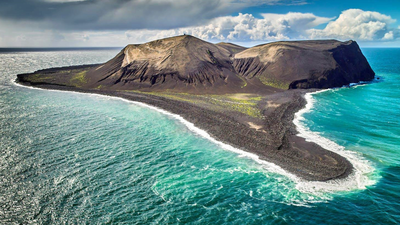
A barren stretch of volcanic rock rising from the Atlantic Ocean may not sound like one of the world’s most protected places, yet almost nobody is allowed to set foot on Iceland’s Surtsey island. There are no permanent residents, hotels or tourist attractions, and even scientists need special permission to visit. The reason lies in the island’s extraordinary origin. Formed by an undersea volcanic eruption, Surtsey is one of the few places on Earth where researchers have been able to watch an ecosystem develop entirely from scratch. By keeping humans away, they have spent decades observing how plants, birds, insects and other life gradually colonise brand-new land exactly as nature intended, without human interference.
How a new island rose from the sea in Iceland
The eruption that gave birth to Surtsey began on 14 November 1963 after an undersea volcano burst through the Atlantic Ocean about 32 kilometres off Iceland’s southern coast. Fishermen first noticed towering columns of steam and ash rising from the sea, followed by explosions powerful enough to send volcanic debris hundreds of metres into the air. Over the next three and a half years, repeated eruptions piled lava, ash and volcanic rock on top of one another until an entirely new island emerged above sea level.Named after Surtr, the fire giant from Norse mythology, Surtsey quickly became one of the youngest islands on Earth. At its largest, it covered about 2.7 square kilometres, although relentless Atlantic waves have steadily worn away its coastline. Even today, erosion continues to reshape the island, making scientists keenly aware that the landscape they are studying is constantly evolving.
Why almost everyone is banned from visiting
Almost as soon as Surtsey appeared, scientists realised they had been handed a once-in-a-lifetime opportunity. Unlike older islands, whose ecosystems had already developed long before anyone could study them, Surtsey offered researchers the chance to witness nature starting from zero.To protect this unique experiment, the Icelandic government declared the island a protected nature reserve. Tourism has never been allowed, and only authorised scientists conducting approved research may land there. Every visit is carefully controlled. Researchers disinfect boots and equipment, inspect clothing for seeds or insects and follow strict procedures to ensure they do not accidentally introduce new species.These precautions may seem excessive, but even a single foreign seed or insect could alter decades of scientific observations. By keeping human influence to an absolute minimum, researchers can be confident that every new organism reaching Surtsey has arrived through natural means rather than human activity.
Watching an ecosystem build itself from scratch
When Surtsey first emerged, it was nothing more than black volcanic rock surrounded by the Atlantic Ocean. There was no soil, no freshwater streams and no visible signs of life. Yet within months, microscopic organisms such as bacteria, fungi and algae began colonising the harsh surface.Lichens and mosses soon followed, gradually breaking down volcanic rock into tiny mineral particles that would eventually form soil. Seeds carried by the wind, ocean currents and seabirds slowly introduced new plant species. Some failed to survive, while others established themselves and spread across the island.Researchers have carefully documented every stage of this ecological succession, creating one of the world’s most complete records of how life establishes itself on newly formed land. Their observations have become valuable references for understanding ecosystem recovery after volcanic eruptions, landslides and other natural disasters.
Seabirds transformed the island
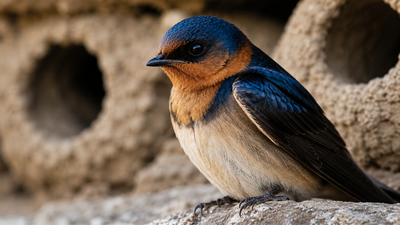
One of the most dramatic changes occurred when seabirds began nesting on Surtsey during the 1980s. Species including gulls found the island an ideal breeding ground, and their arrival transformed the landscape far more quickly than scientists had expected.Bird droppings added nitrogen and other nutrients to the previously barren volcanic soil, dramatically increasing its fertility. The birds also transported seeds in their feathers and digestive systems, introducing new plant species from mainland Iceland. Areas surrounding seabird colonies soon became greener and more diverse than parts of the island where birds rarely nested.Scientists now consider seabirds to be the island’s most important ecosystem engineers because their presence accelerated the development of vegetation, insects and other forms of life.
Even one tomato plant threatened the experiment
The importance of keeping Surtsey untouched became clear after an unexpected incident involving a tomato. During one research expedition, a tomato seed was accidentally introduced to the island, most likely through human waste. Before long, researchers noticed a tomato plant growing among the volcanic rocks.Although harmless in appearance, the plant represented unwanted human interference in one of the world’s most carefully protected scientific experiments. It was immediately removed before it could produce seeds, ensuring the island’s natural ecological record remained intact.The incident is still cited as an example of how even the smallest human mistake can influence fragile ecosystems.
What Surtsey has taught scientists
More than six decades of research have turned Surtsey into one of Earth’s most valuable outdoor laboratories. Scientists have documented how bacteria establish themselves on bare rock, how soil develops over time, how plants compete for limited resources and how birds can reshape entire ecosystems.The island has also helped researchers better understand ecological succession, the process through which barren landscapes gradually become thriving ecosystems. These findings have applications far beyond Iceland, informing conservation projects, habitat restoration and studies of landscapes recovering from volcanic eruptions, wildfires and climate-related disturbances around the world.Surtsey even provides clues about how life might colonise newly formed volcanic islands elsewhere on Earth, and offers insights that scientists use when considering how ecosystems could develop on other planets with volcanic activity.
A UNESCO World Heritage Site unlike any other
Recognising its exceptional scientific value, UNESCO designated Surtsey a World Heritage Site in 2008. Unlike many World Heritage Sites celebrated for their architecture or cultural history, Surtsey earned its status because it remains one of the world’s few places where natural ecological processes can be observed almost entirely free from human disturbance.More than 60 years after rising from the Atlantic Ocean, the island continues to reveal new discoveries. While visitors may never be able to walk its shores, Surtsey’s greatest attraction is not something to be seen up close. It is the rare opportunity it offers scientists to witness nature writing the first chapter of an ecosystem, exactly as it has done for millions of years.