










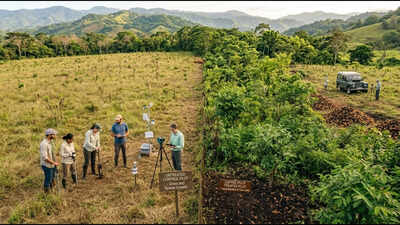
An abandoned cattle pasture in southern Costa Rica hosted an unusual restoration experiment in 2018. Instead of planting rows of young trees or using heavy machinery to reshape the land, researchers spread about 30 truckloads of fresh coffee pulp across part of the degraded pasture. Two years later, the once-open landscape had developed extensive young tree cover, suggesting that an agricultural by-product could play a valuable role in restoring damaged land under suitable conditions.The project tested whether coffee pulp could speed up recovery in degraded pasture. Coffee-producing countries generate large quantities of coffee pulp every harvest season, while many abandoned tropical pastures remain trapped in a degraded state because invasive grasses prevent young trees from becoming established. The experiment explored whether applying this organic material could improve conditions for forest recovery.The results of this study, found in the paper titled Coffee pulp accelerates early tropical forest succession on old fields, were obtained through a comparison of two adjacent pasture plots where one plot was covered with a thick layer of coffee pulp approximately half a meter in depth, whereas the other was not treated at all. In the course of the two years that followed, researchers studied how each of these sites was developing.From degraded grassland to young woodlandAt the beginning of the experiment, both of these plots were overgrown with vigorous grasses. These plants are very competitive when it comes to light and nutrients; hence, they are able to significantly slow down the process of regeneration of the native woodlands.As the coffee pulp decomposed, it formed a thick organic layer over the soil. The paper reports that this reduced the dominance of pasture grasses while increasing soil carbon, nitrogen and phosphorus compared with the untreated plot after two years.The better soil conditions were matched by major changes in vegetation. Shrubs, herbs and young trees became increasingly common in the coffee pulp plot, whereas the untreated area remained largely covered by grass with relatively little woody growth.Field measurements illustrated the scale of the change. The research team found that woody stem density was about 20 times higher in the treated plot than in the untreated one. Woody basal area, an indicator of tree growth and biomass, increased by roughly 30 times, while average canopy height became about four times greater.The clearest difference was in canopy cover. The study found that, after two years, more than 80 per cent of the coffee pulp-treated plot was covered by tree canopy, compared with about 20 per cent of the untreated control plot. Even though the plant life was just at the beginning of the process of successional growth, there was still a significant difference between the two plots.
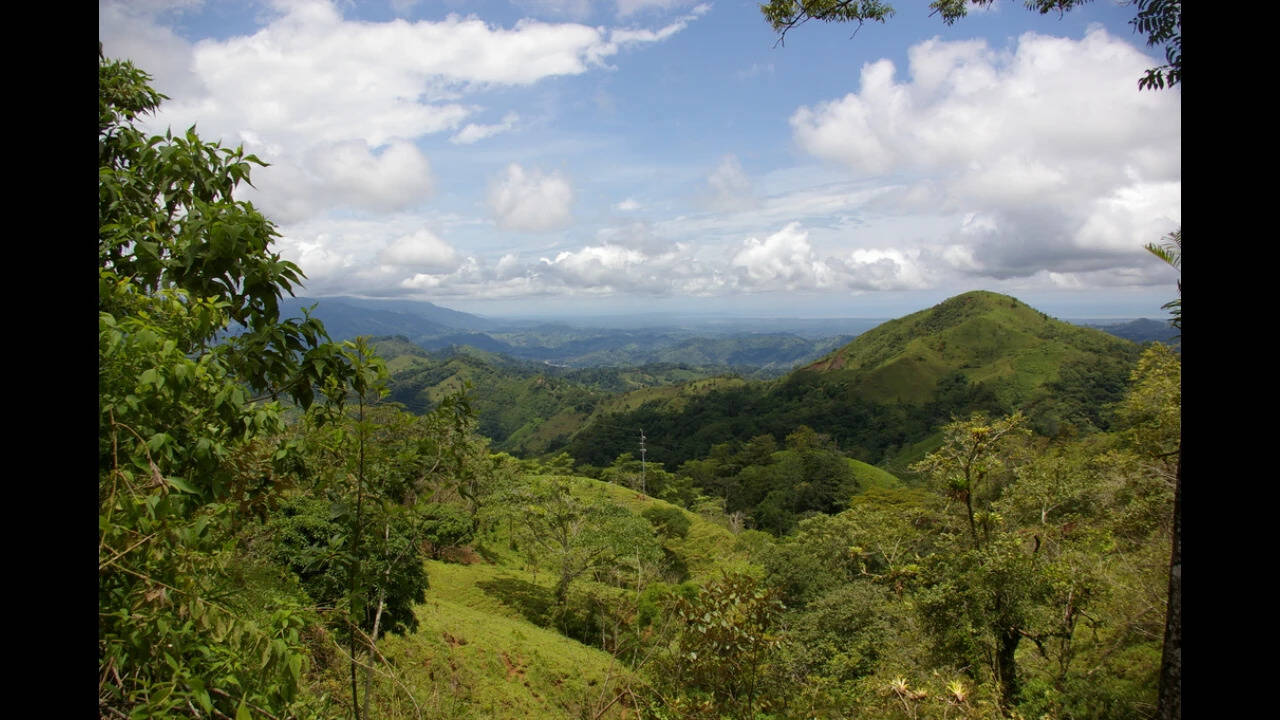
Meanwhile, the area’s canopy cover flourished, metamorphosing grassland into an emerging forest. The findings emphasise the potential of agricultural by-products in fostering forest regeneration given the right circumstances. Image Credits: Wikimedia Commons
Implications of the results for forest restorationAs a result of the research findings, it can be concluded that sometimes changing site conditions might be enough to expedite the process of forest regrowth without being completely dependent on planting trees. This conclusion is valid for landscapes where seeds are brought into the area from neighbouring forests.At the same time, the paper does not present coffee pulp as a universal restoration method. The authors note that this was a case study conducted at one degraded pasture site in southern Costa Rica, and further research would be needed to understand how the approach performs in other restoration settings.The study also raises practical questions. Large volumes of organic material must be applied carefully to avoid unintended environmental impacts. The study was conducted under Costa Rica’s existing regulations, and the authors say the experiment complied with local laws. The researchers also note that using agricultural by-products for restoration should be carefully considered before being expanded to other locations.The study also identifies several questions for future research. It suggests examining whether smaller amounts of coffee pulp could produce similar results, how long any improvements persist and whether the approach is effective in other tropical restoration settings. Although further research is needed before the method can be applied more widely, the findings indicate that coffee pulp has the potential to support ecological restoration under suitable conditions.