









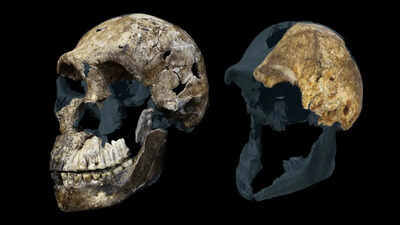
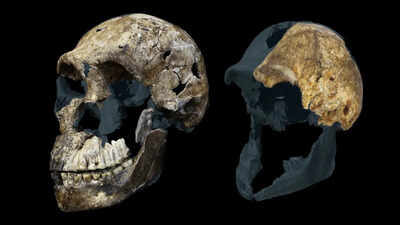
All known skeletons of the ancient human relative Homo naledi discovered in a South African cave system appear to be female, according to a new study that has left researchers questioning what it means for the species. Homo naledi is an extinct human relative discovered in South Africa that lived around 300,000 years ago and showed a mix of primitive and modern human-like traits.The analysis, published in the journal Cell, examined 20 teeth recovered from the Rising Star cave system in the Cradle of Humankind. Using proteomic techniques, scientists searched for sex-specific protein markers in dental enamel to determine whether any of the individuals were male.They found no trace of the AMELY protein variant, which is linked to biological males, but detected AMELX proteins present in both sexes. The result suggests that every sampled individual, including two nearly complete skeletons long assumed to be male, may have been female.
‘They surprised us’
Homo naledi has been a source of debate since its discovery in 2013, when nearly two dozen skeletons were recovered from deep underground chambers.Lee Berger, who leads the Rising Star project, said the result adds to the species’ unusual profile.“I think it is fair to say that they surprised us,” Lee Berger, a National Geographic explorer-in-residence, told Live Science in an email, but H. naledi “has always been an enigmatic discovery.”The cave system has produced some of the most complete fossil remains of the species, including individuals previously labelled Neo and DH1. Those identifications were partly based on skeletal size differences, a method often used in paleoanthropology when genetic data is limited.
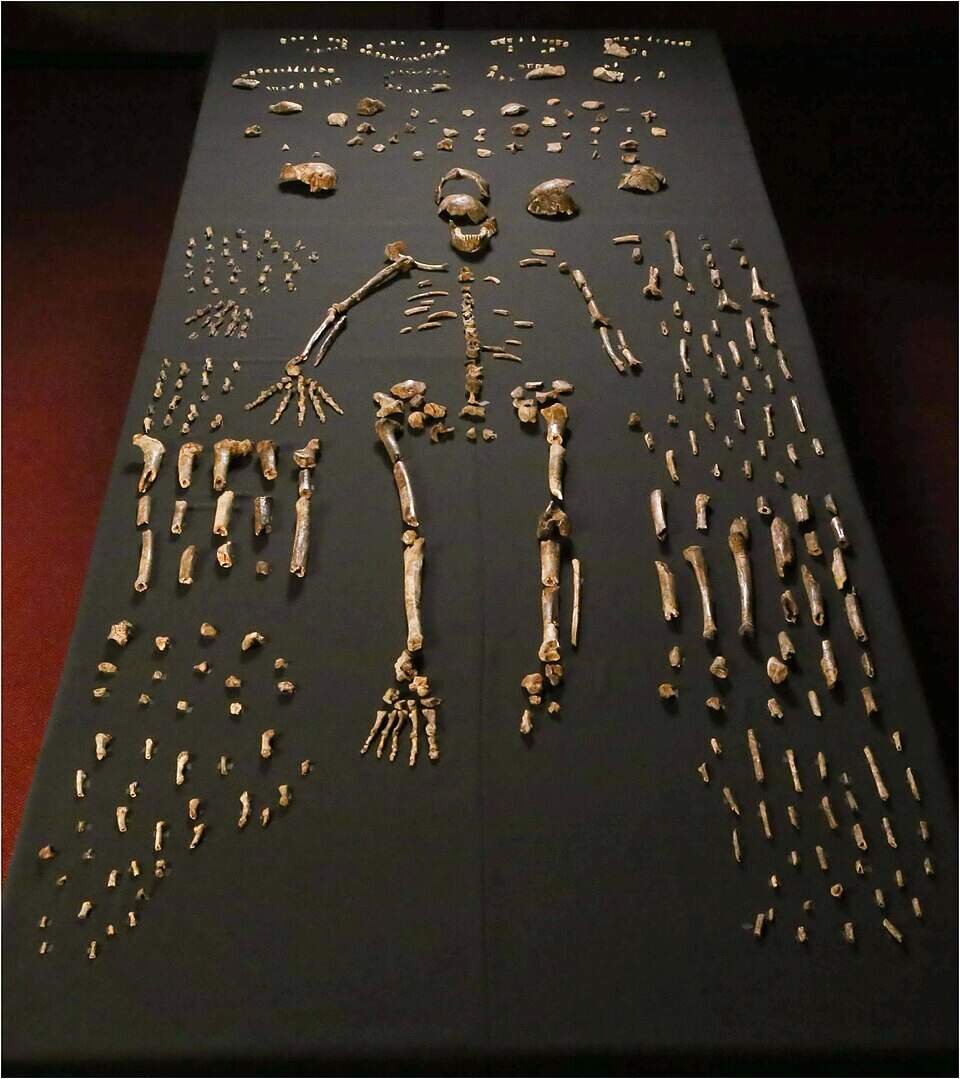
Homo Naledi skeletal specimens
A species that has challenged expectations
Homo naledi already sits at an unusual point in human evolution. The species combined traits seen in earlier ancestors with more modern features. It had a small brain and upper body similar to earlier australopithecines such as Lucy, but hands, feet and a skull shape that resembled later human relatives.Previous work from the Rising Star team has also suggested behaviours that are difficult to reconcile with its small brain size, including the possible use of fire inside cave chambers and claims that the species may have intentionally buried its dead.The latest findings now add a new layer to that debate, particularly because there are no known ancient burial sites or primate fossil collections made up entirely of females.
How scientists tested the teeth
The research team analysed 20 teeth using proteomic analysis, a method that studies ancient proteins rather than DNA. Proteins can survive longer than genetic material, making them useful in deep-time studies where DNA is no longer recoverable.They focused on amelogenin genes, which play a role in forming tooth enamel. The AMELX variant is found in both males and females, while AMELY is typically present only in males.Across all samples, AMELX was present, but AMELY was absent.That pattern suggests the individuals represented in the Rising Star cave system may all be female.
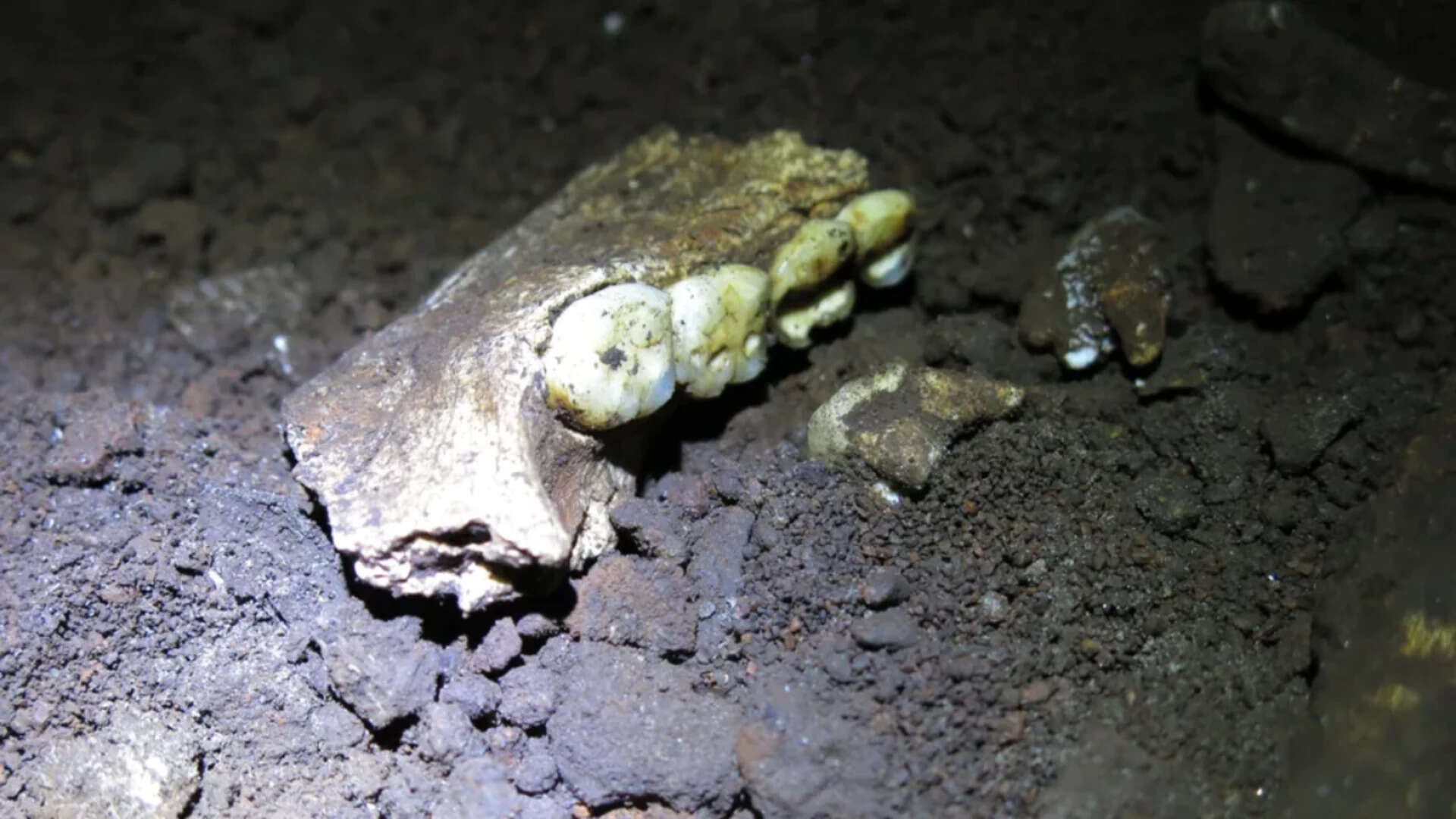
A partial jawbone with teeth from Homo naledi lies was found in the Rising Star cave system (Image credit: Mathew Berger / Rising Star Program)
Interpretation remains uncertain
Researchers are cautious about what the finding actually means.“The bottom line is this is a weird result from an already weird hominin,” Elizabeth Sawchuk, curator of human evolution at the Cleveland Museum of Natural History, said in an email to Live Science. She noted that the absence of AMELY does not automatically rule out the presence of males.One possibility is that Homo naledi had a rare genetic variation in which the AMELY gene was deleted in males. A similar condition has been observed in a small number of modern humans and even one Neanderthal.If that were the case, male and female protein profiles would appear identical, making sex identification through this method unreliable for the species.However, researchers involved in the study say that explanation is unlikely across the entire sample.“Either scenario, namely the absence of H. naledi males in the Rising Star cave system or a systematic deletion of their AMELY gene, is fascinating and would have deep implications for a better understanding of the biology and evolution of this species,” study co-author Enrico Cappellini said in a statement.
Could burial practices explain the pattern?
Some researchers suggest the findings could point to selective burial behaviour, though this remains speculative.“The most likely reason for these robust results are, in my opinion, cultural selection after death for burial by sex and perhaps gender,” Lee Berger said.He added that human history includes examples of burial practices that differ by sex, though no known site in human or primate evolution shows a female-only fossil assemblage.John Hawks, a paleoanthropologist at the University of Wisconsin-Madison and co-author of the study, said the result is unusual in the broader context of archaeology.There are no known ancient cemeteries or primate bone assemblages containing only females, making the Rising Star pattern difficult to interpret with existing evidence.
‘An already weird hominin’
The findings have drawn caution from other researchers who are not part of the study.“The key thing to remember is that failure to detect evidence of AMELY does not mean there are no males in the sample — it just means that none were detected,” Sawchuk said.The uncertainty leaves open multiple explanations, from biological quirks to preservation bias or sampling limitations.
Links to other ancient species
The study also identified a genetic link between Homo naledi and Paranthropus robustus, another ancient hominin that lived in southern Africa between 1 million and 2 million years ago.Researchers found a shared variant connected to collagen production, suggesting either genetic overlap, shared ancestry or some form of interaction that is still not understood.Sawchuk said the finding is difficult to interpret without more comparative data.“Key data are missing from H. erectus and A. africanus that would help put this evidence into context,” she said. “For now, this is another curious finding that bears further investigation.”
Questions about how the species was defined
When Homo naledi was first described in 2015, researchers used differences in skeletal size to suggest male and female categories. That assumption shaped early interpretations of the fossils, including which individuals were considered representative of the species.A 2024 study had already raised doubts, finding very low variation in tooth size and suggesting that the sample might not include two sexes at all.The latest proteomic results strengthen that uncertainty.“Our study helps resolve the long-standing mystery of why Homo naledi lacked significant variation,” study first author Palesa Madupe said in a statement. “It’s probably because they could have all belonged to one sex.”
What it means for human evolution research
If future work confirms the absence of males, or explains why they are missing from the sample, it could reshape understanding of the species and its social structure. It may also change how scientists interpret variation in other fossil hominins where sex is not clearly identifiable.Researchers say the method used in the study could also be applied more widely. Proteomic analysis of ancient remains offers a way to study sex differences in extinct species without damaging rare fossils, potentially opening a new approach to human evolution research.“The only thing that has changed is that we have never seen a male!” Lee Berger said. “When and if we do, we will have to extend the description to include male sex characters and the likely extension of certain aspects of variation.”